Three figures in elegant Edo dress stand close together, absorbed in a shared moment. The print is attributed to Kitagawa Utamaro (c. 1753–1806), the Edo-period master most closely identified with bijin-ga, the ukiyo-e genre devoted to portraits of beauty. The title preserves a genuine ambiguity. In Edo, fashionable young men known as wakashū dressed so much like young women that even practised eyes could hesitate — and this print lets the question stand.
The work shows the classic ukiyo-e woodblock method. The design was carved into blocks of cherry wood, one for the outlines and one for each colour, then printed by hand with water-based pigments on washi paper. Slender carved lines trace the hair and the folds of the robes, while quiet planes of colour hold the three figures in a calm, shallow space.
In a home, the print behaves like a soft conversation. Its muted palette and unhurried mood sit naturally in japandi and scandinavian interiors — above a low side . . . Read More >>
Three figures in elegant Edo dress stand close together, absorbed in a shared moment. The print is attributed to Kitagawa Utamaro (c. 1753–1806), the Edo-period master most closely identified with bijin-ga, the ukiyo-e genre devoted to portraits of beauty. The title preserves a genuine ambiguity. In Edo, fashionable young men known as wakashū dressed so much like young women that even practised eyes could hesitate — and this print lets the question stand.
The work shows the classic ukiyo-e woodblock method. The design was carved into blocks of cherry wood, one for the outlines and one for each colour, then printed by hand with water-based pigments on washi paper. Slender carved lines trace the hair and the folds of the robes, while quiet planes of colour hold the three figures in a calm, shallow space.
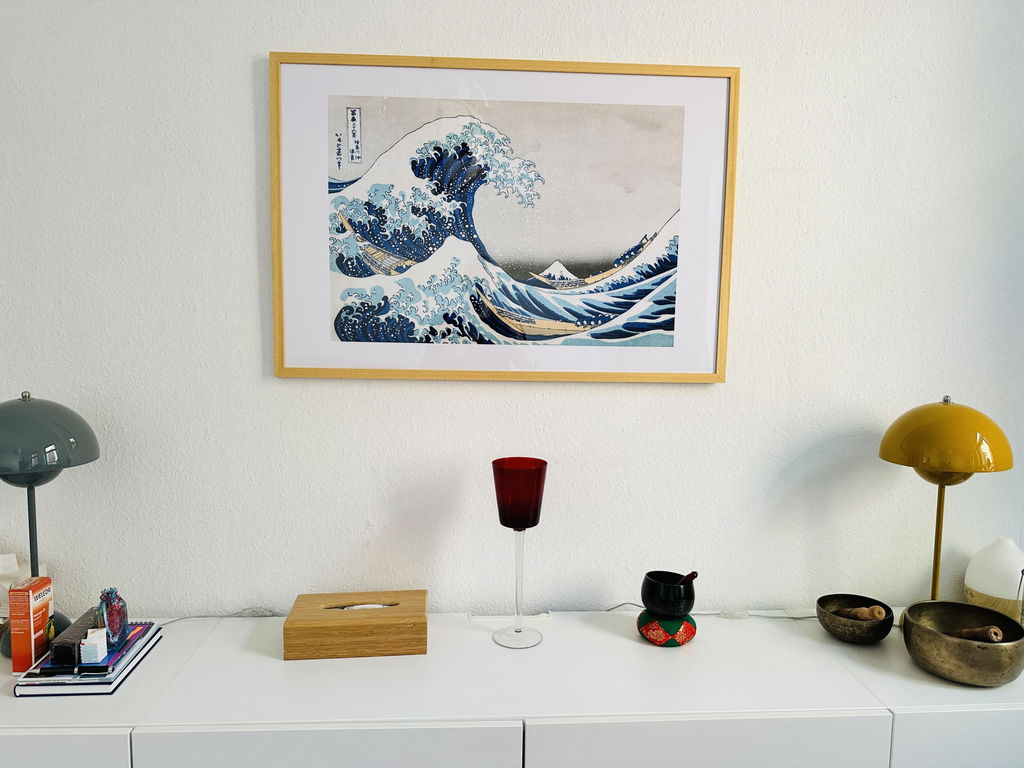
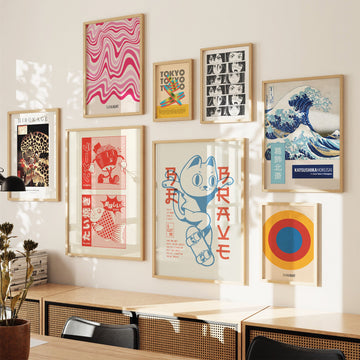
In a home, the print behaves like a soft conversation. Its muted palette and unhurried mood sit naturally in japandi and scandinavian interiors — above a low sideboard, in a bedroom, or in a reading corner where the eye can return to the three faces and keep wondering. It pairs well with pale wood, linen and plenty of empty wall.
The artwork is offered as a print on thick snow-white paper, as a framed print in a wooden frame, or on artist-quality satin canvas. Every piece is hand-finished in Europe.
Frequently asked questions
Why is the print titled “Three Young Men or Women”?
The ambiguity is genuine. In Edo-period Japan, fashionable youths called wakashū wore robes and hairstyles very close to those of young women, so the identity of the figures stays deliberately open.
What is bijin-ga?
Bijin-ga means “pictures of beautiful people”. It was one of the central genres of ukiyo-e, and Kitagawa Utamaro was its most celebrated master.
Is the print securely attributed to Utamaro?
The work is attributed to Kitagawa Utamaro rather than firmly documented. Its subject and the refined treatment of the figures sit comfortably within his bijin-ga tradition.
Which rooms suit this artwork?
Its quiet palette works well in bedrooms, reading corners and hallways. Hung with generous empty space around it, the print becomes a calm focal point in a japandi or scandinavian room.
<< Read Less
Japan historical period: Edo 江戸 (1603-1868)
Check out other artwork of Kitagawa Utamaro
#Bijin-Ga
•
#Decorative Hat
•
#Edo Period
•
#Elegant
•
#Fan
•
#Geisha
•
#Group
•
#Hat
•
#Japanese Art
•
#Japanese Fashion
•
#Japanese Woodblock Print
•
#Kimono
•
#Kitagawa Utamaro
•
#Portrait
•
#Samurai
•
#Samurai Sword (Wakizashi)
•
#Traditional
•
#Traditional Dress
•
#Ukiyo-E
•
#Utamaro Kitagawa
•
#Women