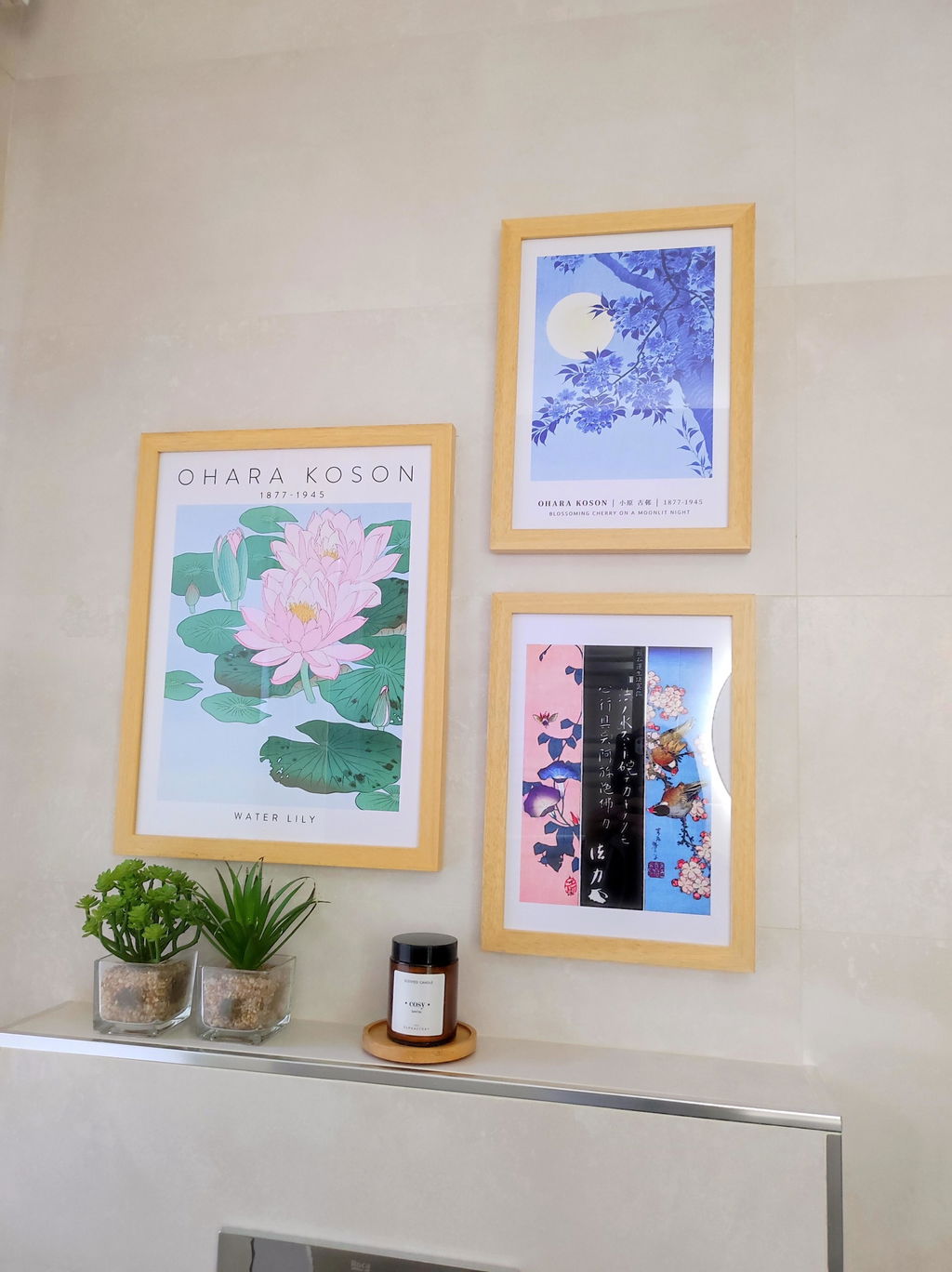
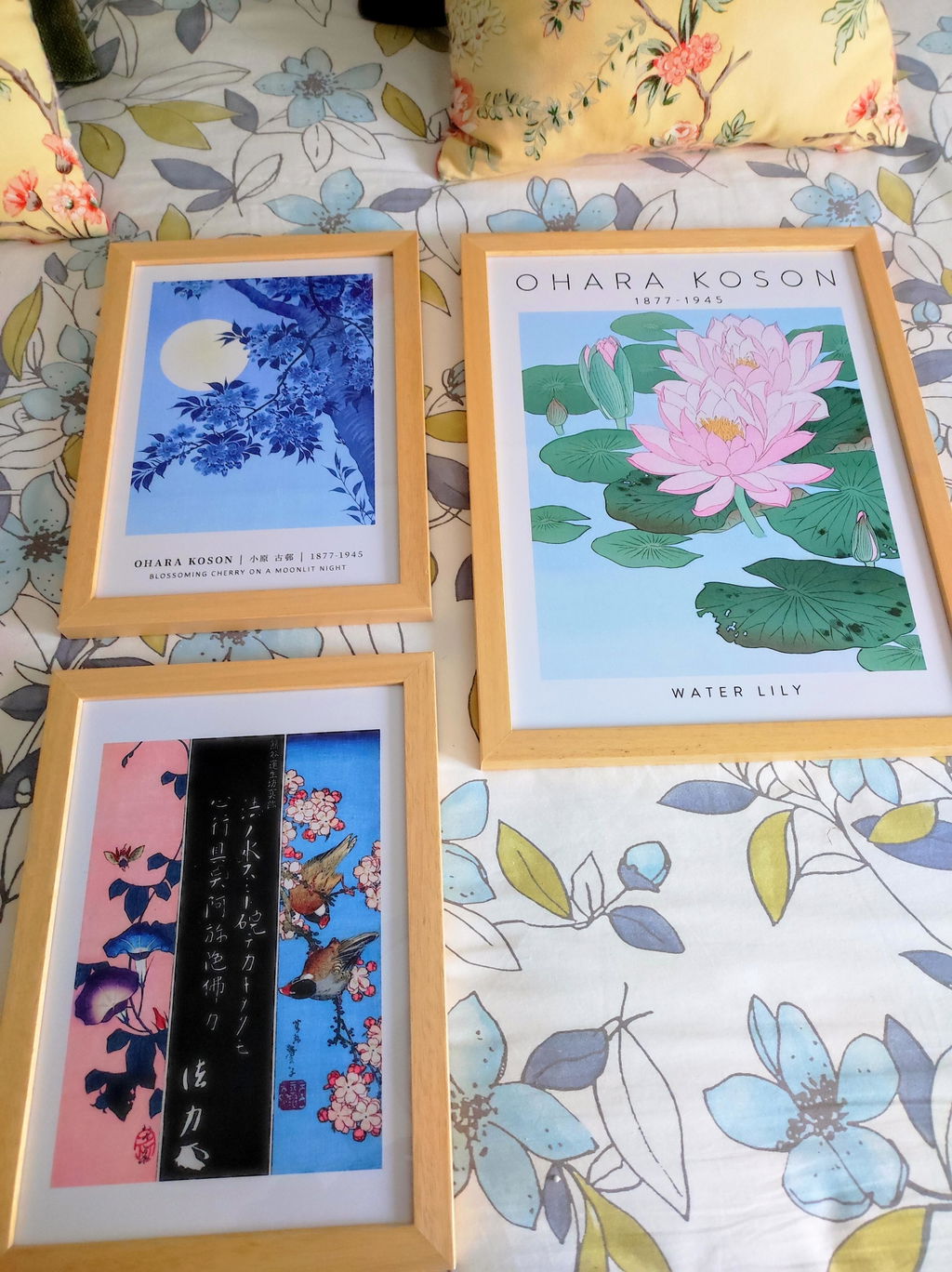
A single water lily rests on still water in this colour woodblock after Ohara Koson (1877–1945), one of the most loved hands in kachō-e, the Japanese tradition of bird-and-flower pictures. Koson worked within the shin-hanga movement, which renewed Edo woodblock craft in the early twentieth century, and he made the close study of plants and creatures his lifelong subject. Here a flower and its floating leaves are all the image needs.
The print is made from several hand-carved blocks, one per colour, printed onto paper. Its softness comes from bokashi, a gradation worked by hand across the block so one tone fades gently into the next, giving the petals and leaves their quiet depth. The composition leaves much of the sheet open, in the way that lets a single subject hold the eye.
On a wall the image is calm and watery. Its cool, restful palette settles easily beside light wood, stone and other natural materials, so it sits well in a Japandi or pared-back room. It s . . . Read More >>
A single water lily rests on still water in this colour woodblock after Ohara Koson (1877–1945), one of the most loved hands in kachō-e, the Japanese tradition of bird-and-flower pictures. Koson worked within the shin-hanga movement, which renewed Edo woodblock craft in the early twentieth century, and he made the close study of plants and creatures his lifelong subject. Here a flower and its floating leaves are all the image needs.
The print is made from several hand-carved blocks, one per colour, printed onto paper. Its softness comes from bokashi, a gradation worked by hand across the block so one tone fades gently into the next, giving the petals and leaves their quiet depth. The composition leaves much of the sheet open, in the way that lets a single subject hold the eye.
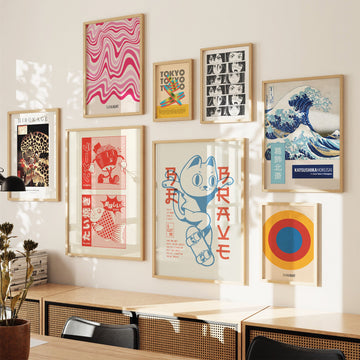
On a wall the image is calm and watery. Its cool, restful palette settles easily beside light wood, stone and other natural materials, so it sits well in a Japandi or pared-back room. It suits a bathroom, a bedroom, or any quiet corner.
This is a gallery-style edition. On fine-art paper and framed prints, a wide printed border surrounds the image in the manner of a museum mat, holding the same proportion whether the sheet is small or large. The canvas edition is stretched over a solid wooden frame instead, and hangs without a border or additional framing. Each version is produced in Europe to order.
Frequently asked questions
What does this print depict?
A single water lily resting on still water with its floating leaves, a calm aquatic subject in the kachō-e, or bird-and-flower, tradition.
What is kachō-e?
The Japanese genre of bird-and-flower pictures, devoted to plants, blossoms and creatures observed closely from nature.
How were the soft tones achieved?
Through bokashi, a hand-applied gradation across the wooden block that lets one colour fade gently into another, giving the petals and leaves their soft depth.
Which rooms suit this print?
Its calm, watery palette suits a bathroom, bedroom or quiet corner, and pairs well with light wood, stone and other natural materials.
<< Read Less
Japan historical period: Showa 昭和 (1926-1989)
Check out other artwork of Ohara Koson
#Botanical
•
#Flowers
•
#Green
•
#Kacho-E
•
#Lily Pads
•
#Lotus Flower
•
#Nature
•
#Ohara Koson
•
#Pink
•
#Pond
•
#Shin-Hanga
•
#Traditional Japanese Art
•
#Water Lily