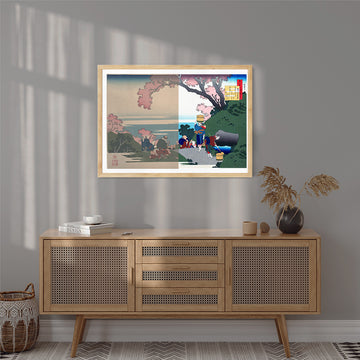
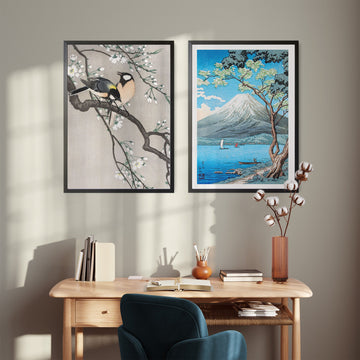
At the foot of Mount Ashitaka, in Shizuoka Prefecture, a river works its way over rocks while the surrounding country rests in quiet. Touches of warm colour in the foliage suggest the turn of the season, and in the distance Mount Fuji keeps watch. The scene is by Takahashi Shōtei, a defining figure of the shin-hanga movement of the early twentieth century, which returned the Japanese landscape print to everyday places like this one.
The original was made as a colour woodblock print. In the shin-hanga manner, the design was carved into wooden blocks and printed by hand, colour over colour, with soft bokashi gradations lending the sky and water their depth. The moving water and still mountain hold the print in a gentle balance.
In a home, the print offers what the scene itself offers: a place for the eye to slow down. Its natural palette of water, rock and seasonal colour suits living rooms, studies and hallways kept deliberately simple. In a japandi or Scandinavi . . . Read More >>
At the foot of Mount Ashitaka, in Shizuoka Prefecture, a river works its way over rocks while the surrounding country rests in quiet. Touches of warm colour in the foliage suggest the turn of the season, and in the distance Mount Fuji keeps watch. The scene is by Takahashi Shōtei, a defining figure of the shin-hanga movement of the early twentieth century, which returned the Japanese landscape print to everyday places like this one.
The original was made as a colour woodblock print. In the shin-hanga manner, the design was carved into wooden blocks and printed by hand, colour over colour, with soft bokashi gradations lending the sky and water their depth. The moving water and still mountain hold the print in a gentle balance.
In a home, the print offers what the scene itself offers: a place for the eye to slow down. Its natural palette of water, rock and seasonal colour suits living rooms, studies and hallways kept deliberately simple. In a japandi or Scandinavian interior it brings landscape in without breaking the room's calm.
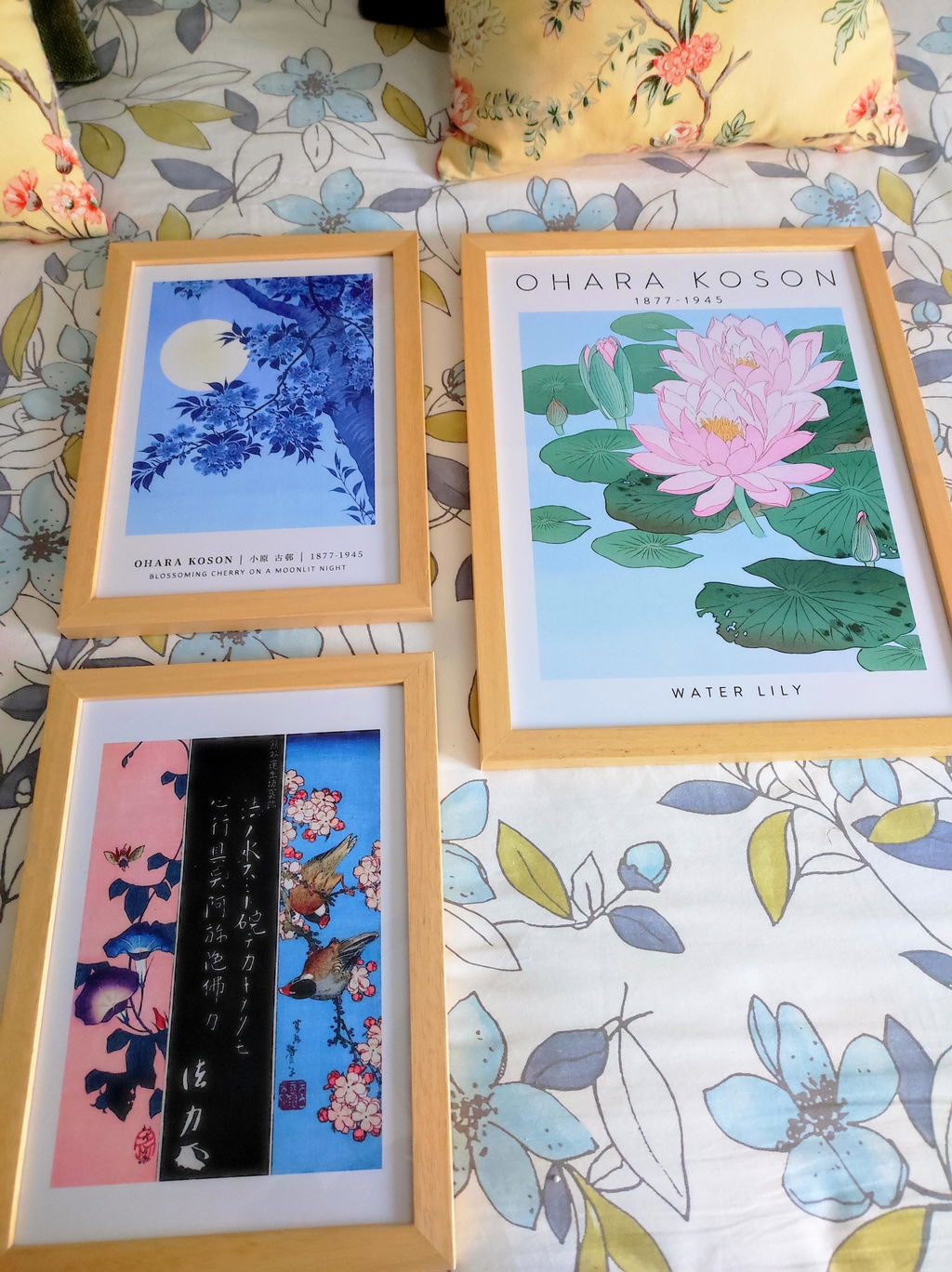
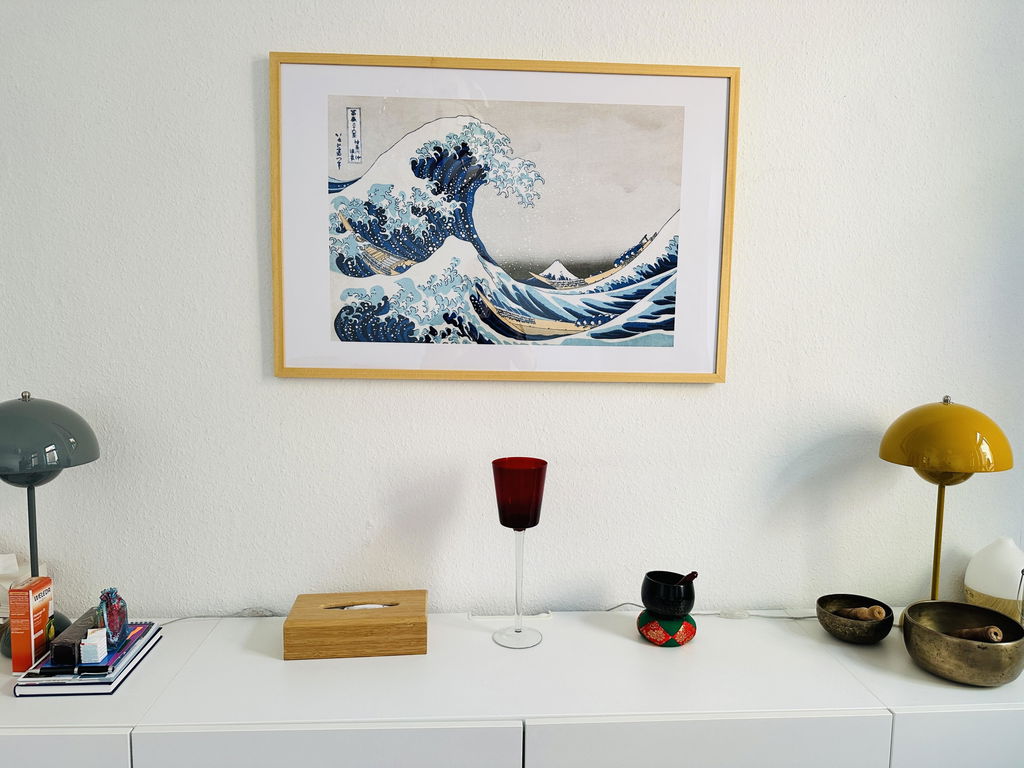
This is a gallery-style edition. On fine-art paper and framed prints, a wide printed border surrounds the image in the manner of a museum mat, holding the same proportion whether the sheet is small or large. The canvas edition is stretched over a solid wooden frame instead, and hangs without a border or additional framing. Each version is produced in Europe to order.
Frequently asked questions
What does this print show?
A quiet rural scene below Mount Ashitaka in Shizuoka Prefecture. A river runs over rocks in the foreground, warm foliage hints at the season, and Mount Fuji is visible in the distance.
How was the original made?
As a colour woodblock print of the early twentieth century, within the shin-hanga movement. The design was carved into wooden blocks and printed by hand, with bokashi gradations giving sky and water their soft depth.
What does gallery-style mean?
The artwork is set within a wide printed border that carries the title and artist in restrained modern type, similar to a museum mat. The piece arrives as a finished gallery presentation, ready to hang or frame.
Which rooms does it suit?
Its natural palette of water, rock and seasonal colour suits living rooms, studies and hallways. In japandi and Scandinavian interiors it pairs well with wood, stone and plain textiles.
<< Read Less
Japan historical period: Showa 昭和 (1926-1989)
Place of origin:
Chubu region
Check out other artwork of Takahashi Shōtei