Shrine on a Hill is a contemporary landscape that borrows the language of sumi-e and classical Chinese ink painting — the shan shui tradition of mountains and water. A pagoda sits on a wooded slope above a still lake, with distant peaks fading into mist and a red sun resting in the sky.
The image is built from layered washes of grey, from near-black foreground rock to the faintest far mountains. This graded ink, thinned with more water as it recedes, is how ink painters created depth without perspective lines. A thin waterfall and a few brushed trees give the scene its scale.
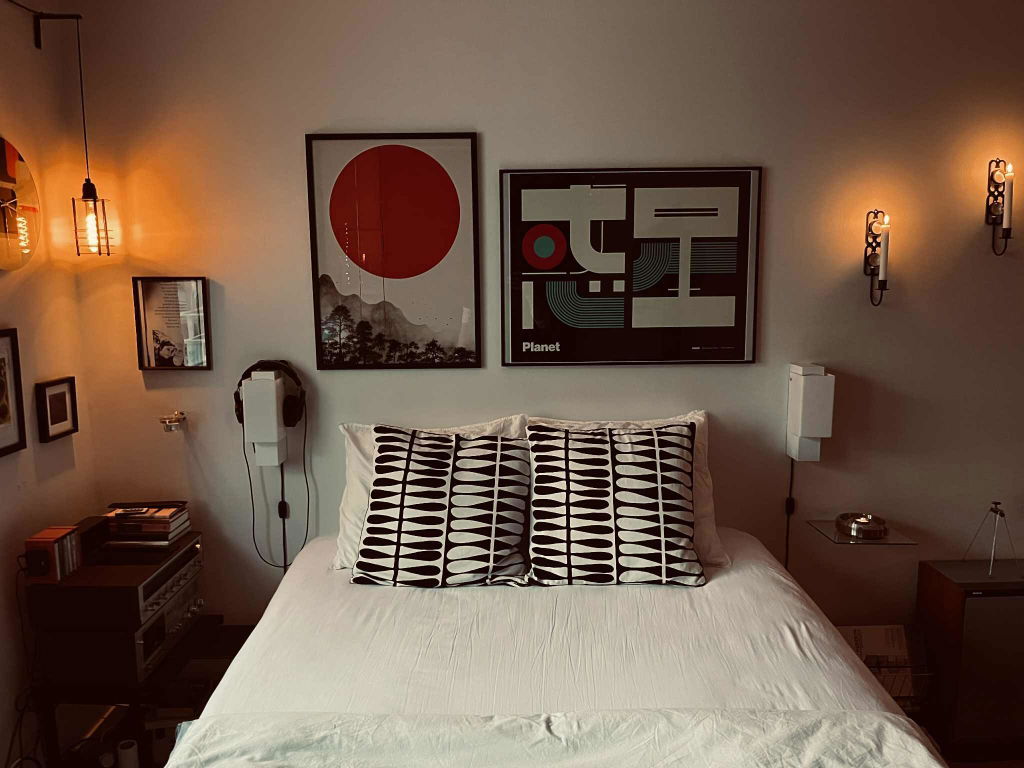
In a home the print brings a sense of distance and quiet into a room. Its muted greys sit easily with natural wood, stone, and soft textiles, and the single red accent keeps the eye from drifting. It works above a sofa, a console, or a bed where you want a contemplative view.
Available as a fine-art paper print, framed behind shatter-resistant acrylic, or as a satin-coated cotton canvas . . . Read More >>
Shrine on a Hill is a contemporary landscape that borrows the language of sumi-e and classical Chinese ink painting — the shan shui tradition of mountains and water. A pagoda sits on a wooded slope above a still lake, with distant peaks fading into mist and a red sun resting in the sky.
The image is built from layered washes of grey, from near-black foreground rock to the faintest far mountains. This graded ink, thinned with more water as it recedes, is how ink painters created depth without perspective lines. A thin waterfall and a few brushed trees give the scene its scale.
In a home the print brings a sense of distance and quiet into a room. Its muted greys sit easily with natural wood, stone, and soft textiles, and the single red accent keeps the eye from drifting. It works above a sofa, a console, or a bed where you want a contemplative view.
Available as a fine-art paper print, framed behind shatter-resistant acrylic, or as a satin-coated cotton canvas. Each format holds the soft tonal range of the ink washes.
Frequently asked questions
What tradition is Shrine on a Hill based on?
It reinterprets shan shui, the classical East Asian ink-painting tradition of mountains and water, alongside Japanese sumi-e. The pagoda, lake and layered peaks are its core motifs.
How is the sense of depth created?
Through graded ink washes — dark, dense tones in the foreground giving way to pale, misty greys in the distance. This is how ink painters suggested space without linear perspective.
What does the pagoda represent?
The pagoda and hillside shrine evoke retreat and stillness — a place set apart from the world. It gives the landscape a human focal point amid the mountains.
Where does this print work best?
Above a sofa, console or bed in a calm interior. The muted greys and single red sun pair naturally with wood, stone and linen in a japandi or wabi-sabi setting.
<< Read Less
#Ink
•
#Ink Wash
•
#Ink Wash Painting
•
#Japanese
•
#Japanese Inspired
•
#Lake
•
#Landscape
•
#Minimalist
•
#Mountain
•
#Oriental
•
#Pagoda
•
#Sumi-E
•
#Sumi-E Ink Wash
•
#Sun
•
#Traditional Chinese Ink Wash Painting
•
#Tranquil
•
#Waterfall