Pink lotus blooms open above broad green leaves, studied with the patience of a botanist and the eye of an artist. The image is by Ogawa Kazumasa, a pioneering photographer of Meiji-era Japan working in the late nineteenth century. In Buddhist culture the lotus rises clean from muddy water, and so the flower has long stood for purity emerging from the ordinary world — a meaning that gives this quiet study its depth.
This is not a woodblock print. The original is a hand-coloured collotype: a photographic image, printed through a fine collotype plate and then coloured by hand. The process joins the precision of the camera with the warmth of applied pigment, producing soft, true detail in the petals and leaves that no brush alone could record.
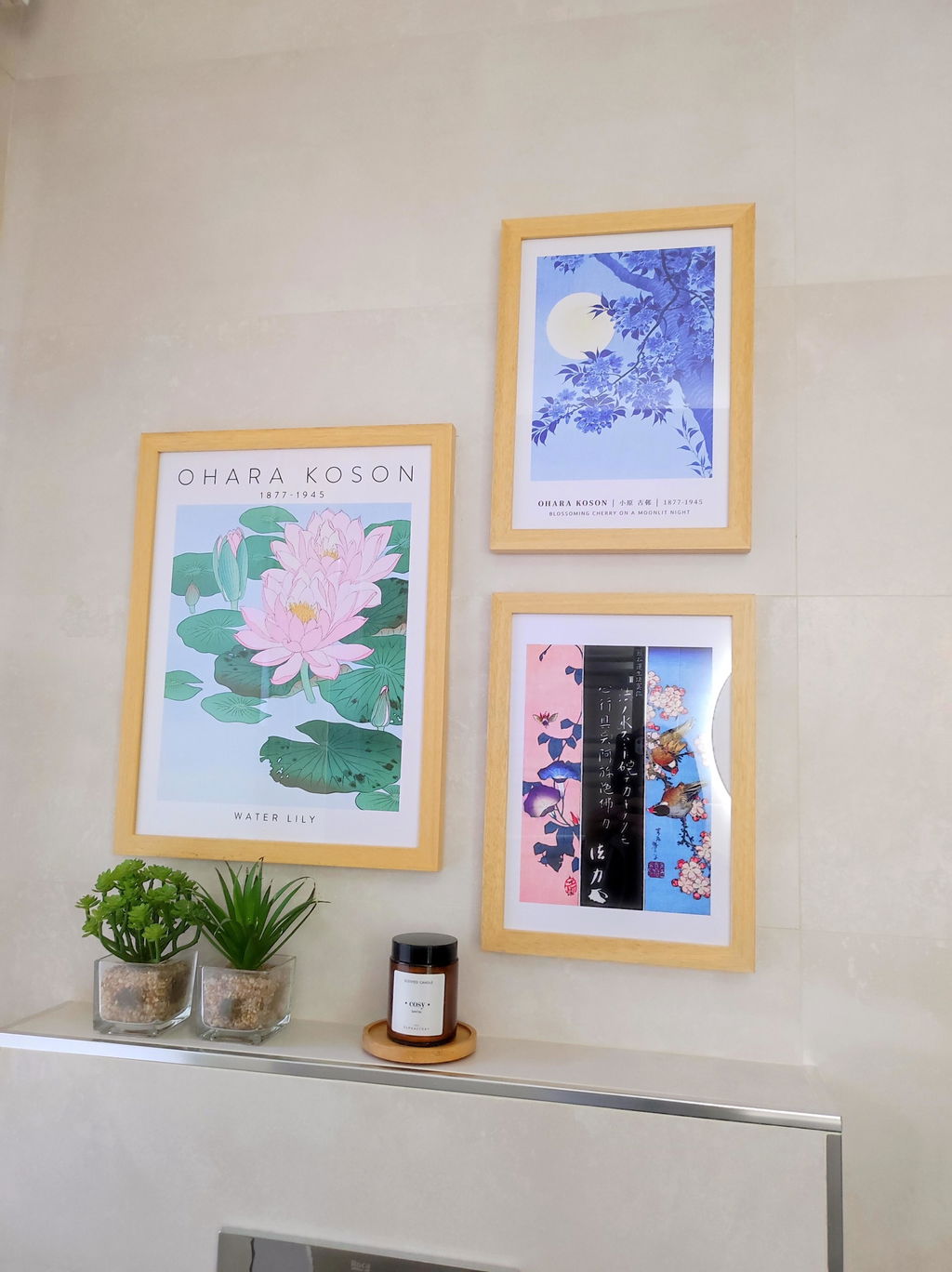
In a home, the lotus study reads as a moment of calm. Its rose and green palette warms a neutral wall without crowding it — in a bathroom, a bedroom, an entryway, or anywhere a single unhurried image is enough. In japandi and . . . Read More >>
Pink lotus blooms open above broad green leaves, studied with the patience of a botanist and the eye of an artist. The image is by Ogawa Kazumasa, a pioneering photographer of Meiji-era Japan working in the late nineteenth century. In Buddhist culture the lotus rises clean from muddy water, and so the flower has long stood for purity emerging from the ordinary world — a meaning that gives this quiet study its depth.
This is not a woodblock print. The original is a hand-coloured collotype: a photographic image, printed through a fine collotype plate and then coloured by hand. The process joins the precision of the camera with the warmth of applied pigment, producing soft, true detail in the petals and leaves that no brush alone could record.
In a home, the lotus study reads as a moment of calm. Its rose and green palette warms a neutral wall without crowding it — in a bathroom, a bedroom, an entryway, or anywhere a single unhurried image is enough. In japandi and Scandinavian interiors it brings a botanical note that stays soft-spoken.
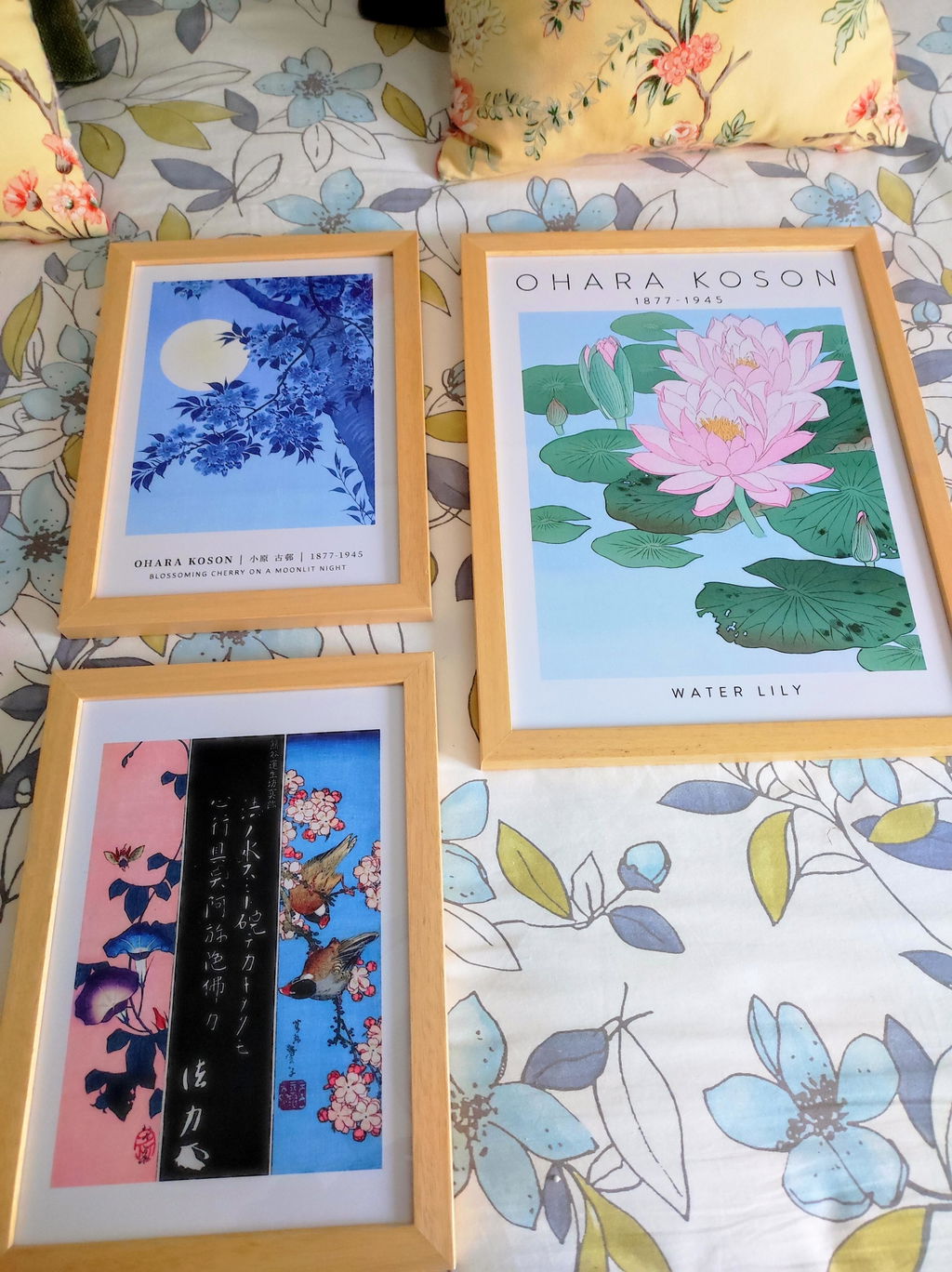
This is a gallery-style edition. On fine-art paper and framed prints, a wide printed border surrounds the image in the manner of a museum mat, holding the same proportion whether the sheet is small or large. The canvas edition is stretched over a solid wooden frame instead, and hangs without a border or additional framing. Each version is produced in Europe to order.
Frequently asked questions
Is this a woodblock print?
No. The original is a hand-coloured collotype — a photograph by Ogawa Kazumasa, printed through a collotype plate and coloured by hand in the late nineteenth century. It is a photographic work, not a woodblock print.
What does the lotus symbolise?
In Buddhist culture the lotus grows out of muddy water yet opens clean, so it stands for purity rising from the ordinary world. This gives the flower a contemplative meaning beyond its botanical beauty.
What does gallery-style mean?
The artwork is set within a wide printed border that carries the title and artist in restrained modern type, similar to a museum mat. The piece arrives as a finished gallery presentation, ready to hang or frame.
Which rooms does it suit?
Its soft pinks and greens suit calm, light-filled spaces — bedrooms, bathrooms and entryways. In japandi and Scandinavian interiors it adds a botanical accent that keeps the room quiet.
<< Read Less
Japan historical period: Meiji 明治 (1868-1912)
Check out other artwork of Ogawa Kazumasa
#Botanical
•
#Botanical Photography
•
#Botanical Print
•
#Delicate
•
#Floral
•
#Flowers
•
#Green
•
#Japanese Art
•
#Kacho-E
•
#Lotus
•
#Minimalist
•
#Modern Botanical Nature
•
#Nature Photography
•
#Ogawa Kazumasa
•
#Pink
•
#Serene