The swimmer-hero Rōri Hakuchō Chōjun cuts through surging water, blade at the ready, his tattooed body set against the churn of the current. He is Zhang Shun of the Chinese tale of the Water Margin, called "White Streak in the Waves" for fighting as surely below the surface as above it. The sheet belongs to "One Hundred and Eight Heroes of the Popular Suikoden," the warrior series Utagawa Kuniyoshi (1797–1861) began around 1827–1828 — the series that made his name in Edo.
This is a musha-e, a warrior print, and the genre suited Kuniyoshi's temperament. The drawing is muscular and quick: the hero's tattooed skin and the broken surface of the water demand two registers of detail at once, dense ornament against sweeping current, and the carver delivers both. Strong pigment and decisive line give the scene its forward press — a single moment of action held still on paper.
For all its motion, the print resolves into one dark-and-light rhythm, which is why it sits mor . . . Read More >>
The swimmer-hero Rōri Hakuchō Chōjun cuts through surging water, blade at the ready, his tattooed body set against the churn of the current. He is Zhang Shun of the Chinese tale of the Water Margin, called "White Streak in the Waves" for fighting as surely below the surface as above it. The sheet belongs to "One Hundred and Eight Heroes of the Popular Suikoden," the warrior series Utagawa Kuniyoshi (1797–1861) began around 1827–1828 — the series that made his name in Edo.
This is a musha-e, a warrior print, and the genre suited Kuniyoshi's temperament. The drawing is muscular and quick: the hero's tattooed skin and the broken surface of the water demand two registers of detail at once, dense ornament against sweeping current, and the carver delivers both. Strong pigment and decisive line give the scene its forward press — a single moment of action held still on paper.
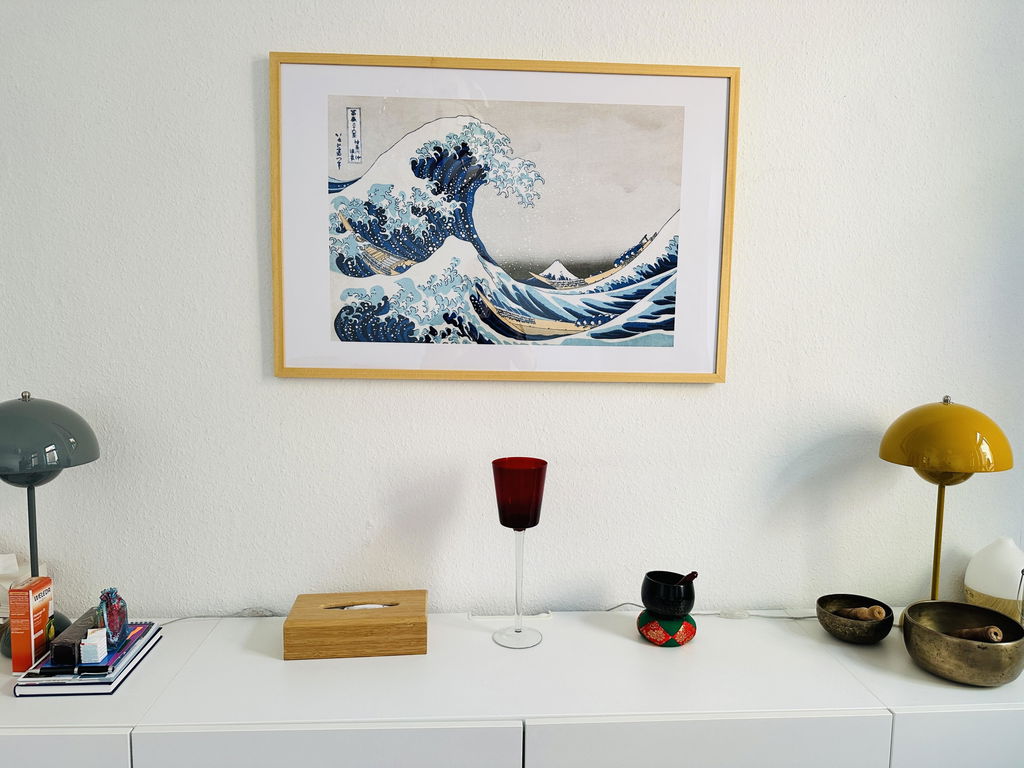
For all its motion, the print resolves into one dark-and-light rhythm, which is why it sits more calmly on a wall than its subject suggests. In a japandi or Scandinavian room it works as a counterweight: one concentrated burst of energy against pale wood, linen, and quiet surfaces. A study, a hallway, or the wall above a desk lets it speak at full strength.
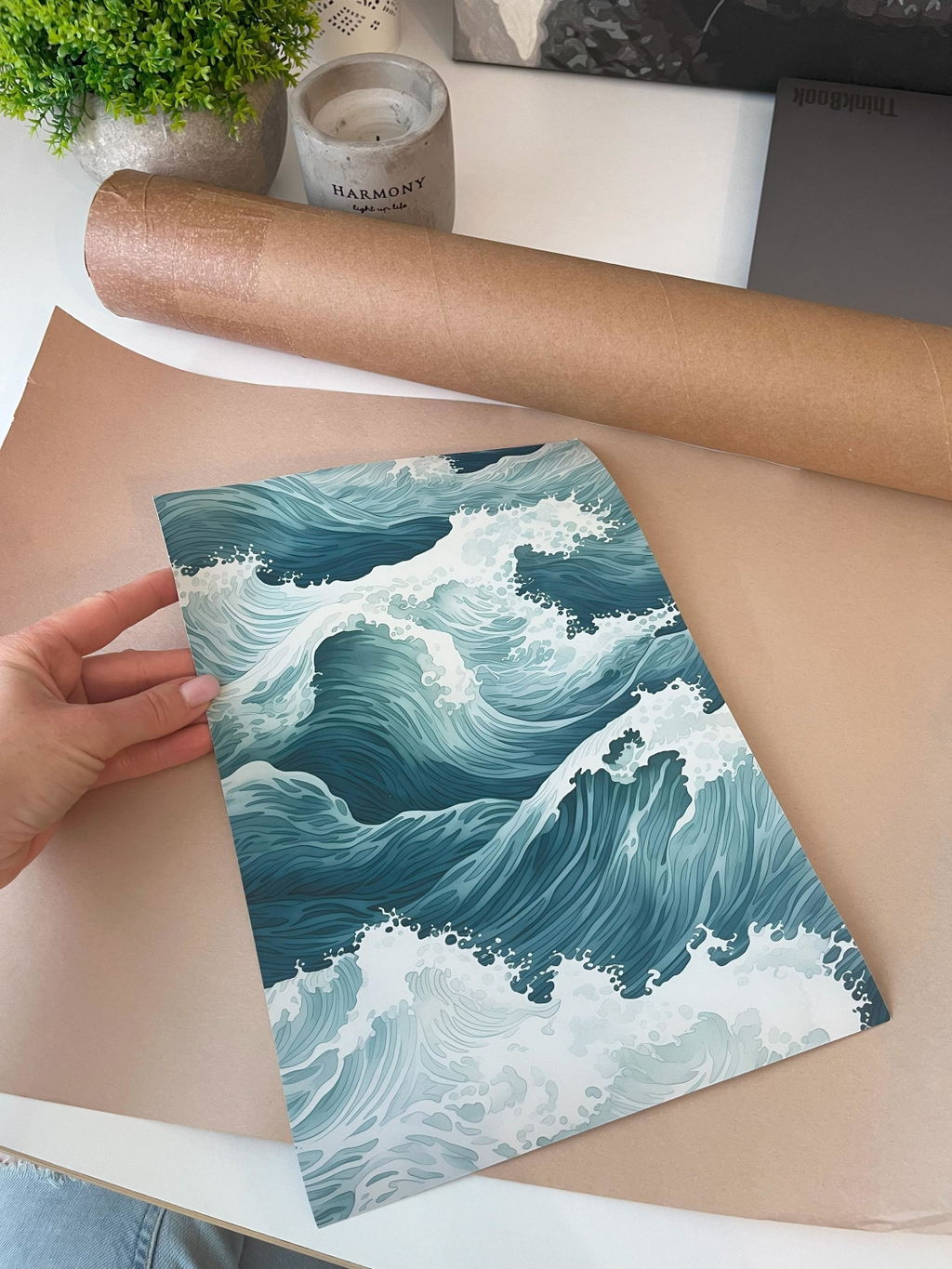
The motif is offered as a print on thick snow-white paper, ready for framing, in a wooden frame, or as artist-quality satin canvas with a gently woven surface. Each piece is hand-finished in Europe and shipped with care.
Frequently asked questions
Who is Rōri Hakuchō Chōjun?
He is Zhang Shun, the swimmer-hero of the Chinese novel known in Japan as the Suikoden (the Water Margin). His nickname, "White Streak in the Waves," honors his skill in the water, and Kuniyoshi shows him in his element — surrounded by surging currents.
Which series does this print come from?
From "One Hundred and Eight Heroes of the Popular Suikoden," which Kuniyoshi began around 1827–1828. The series was a popular success and established his reputation as the leading designer of warrior prints in Edo.
What is a musha-e?
A musha-e is a warrior print: a branch of the Japanese woodblock tradition devoted to heroes, battles, and legendary feats. Kuniyoshi is considered its great master, prized for combining dense tattoo ornament with dramatic movement.
Does such a dynamic image suit a calm interior?
Yes — as a deliberate counterpoint. The print concentrates its energy in one place, so a quiet room frames it rather than competes with it. It pairs well with pale wood, linen, and uncluttered walls.
<< Read Less
Japan historical period: Edo 江戸 (1603-1868)
Check out other artwork of Utagawa Kuniyoshi