A warrior braces against the storm, sword at the ready, his fur cloak caught by the wind. This is Kinhyōshi Yōrin — the Japanese name of the Chinese hero Yang Lin — as imagined by Utagawa Kuniyoshi (1797–1861), the Edo master of the warrior print. The sheet belongs to “One Hundred and Eight Heroes of the Popular Suikoden” (c. 1827), the series that made Kuniyoshi’s name and set off a lasting appetite for Suikoden imagery in Edo.
The print is a musha-e, a warrior picture, made by the classic ukiyo-e woodblock method. The design was carved into cherry wood blocks and printed by hand, colour by colour, with water-based pigments. Kuniyoshi’s carved line carries the drama: it whips through the cloak, tightens around the hero’s grip on his sword, and fills the sheet with weather and movement while the printed colours stay disciplined and flat.
In a calm interior, a print like this works as a counterpoint. Japandi and scandinavian rooms tend toward stillness, and one c . . . Read More >>
A warrior braces against the storm, sword at the ready, his fur cloak caught by the wind. This is Kinhyōshi Yōrin — the Japanese name of the Chinese hero Yang Lin — as imagined by Utagawa Kuniyoshi (1797–1861), the Edo master of the warrior print. The sheet belongs to “One Hundred and Eight Heroes of the Popular Suikoden” (c. 1827), the series that made Kuniyoshi’s name and set off a lasting appetite for Suikoden imagery in Edo.
The print is a musha-e, a warrior picture, made by the classic ukiyo-e woodblock method. The design was carved into cherry wood blocks and printed by hand, colour by colour, with water-based pigments. Kuniyoshi’s carved line carries the drama: it whips through the cloak, tightens around the hero’s grip on his sword, and fills the sheet with weather and movement while the printed colours stay disciplined and flat.
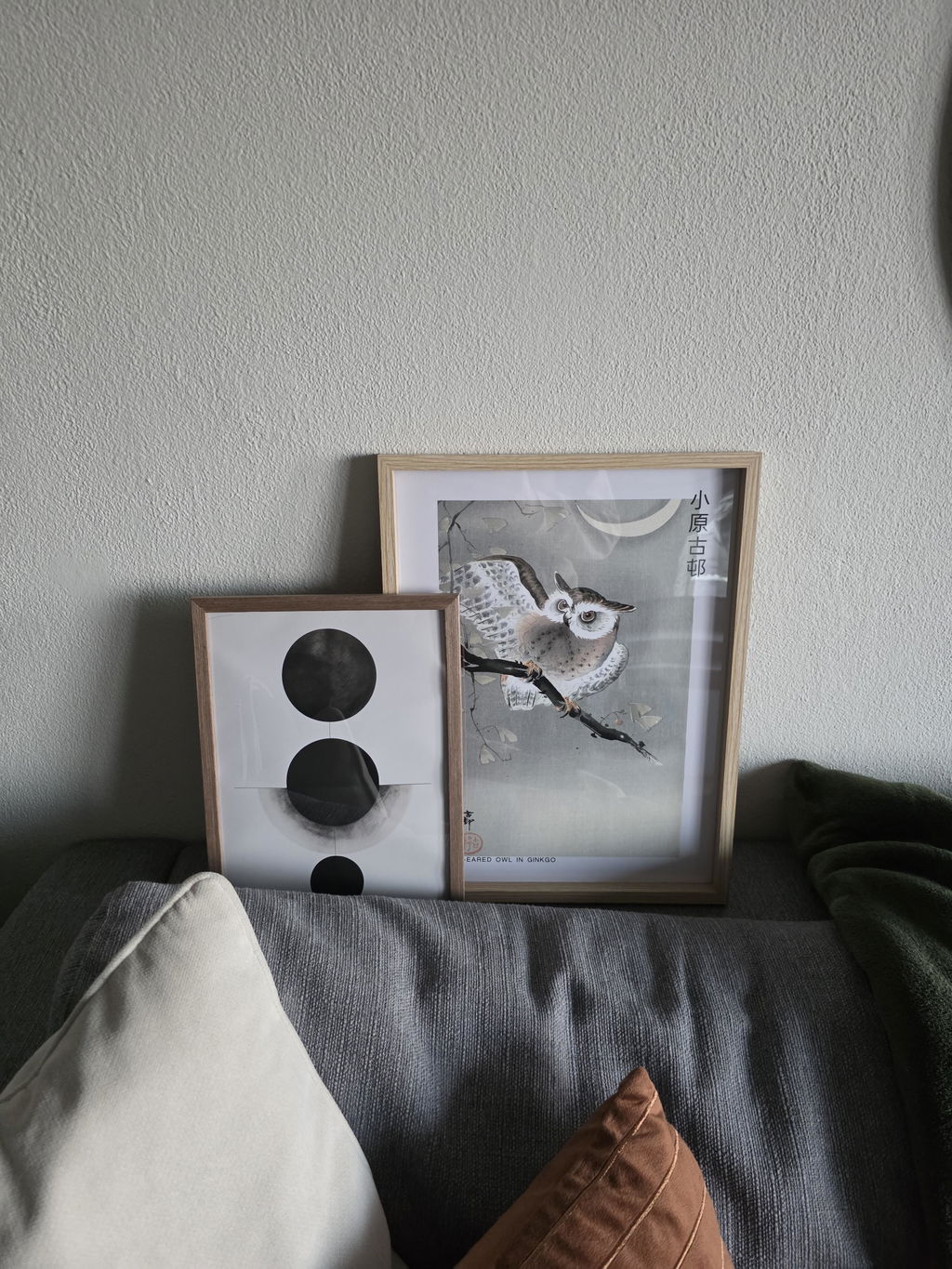
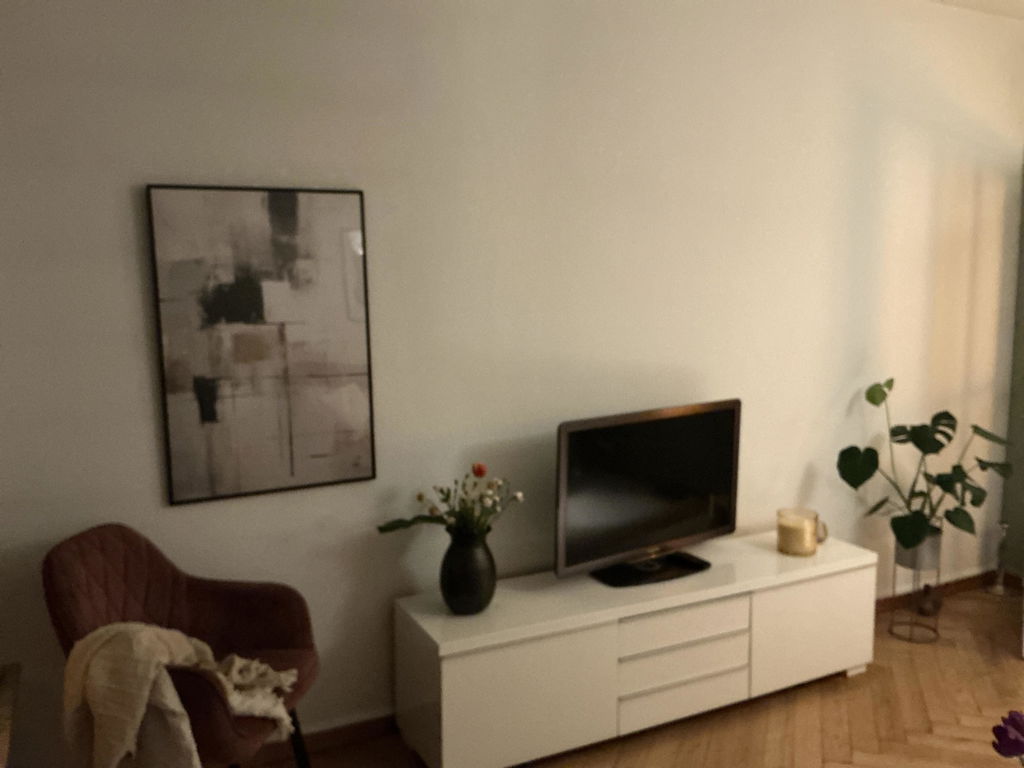
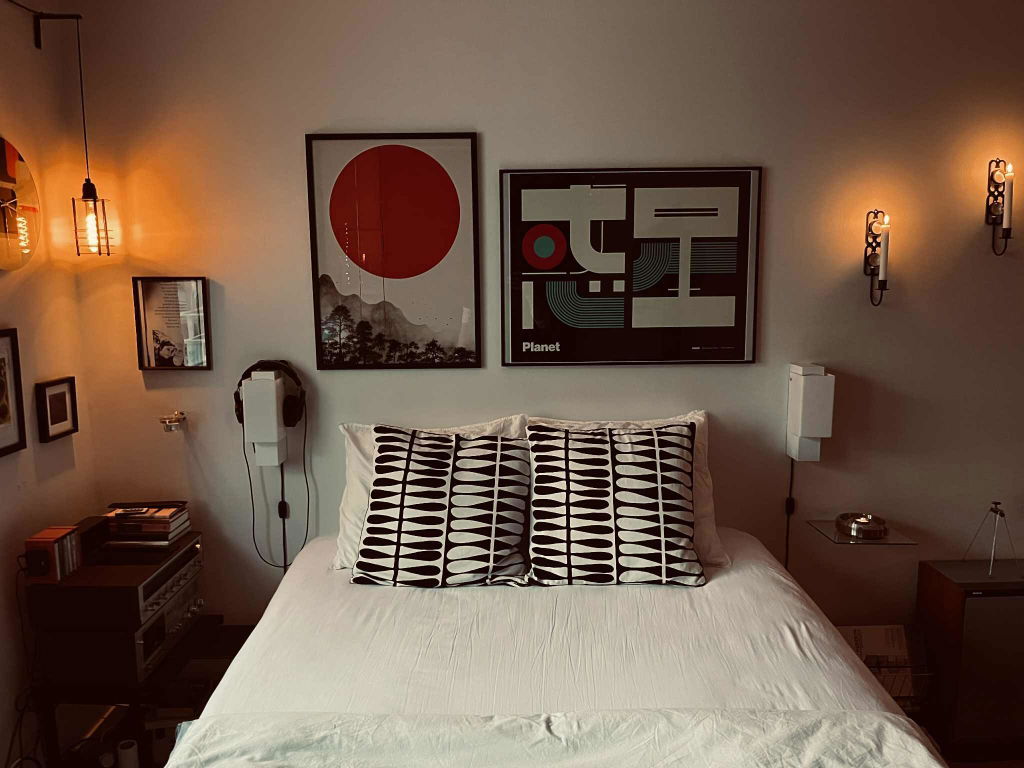
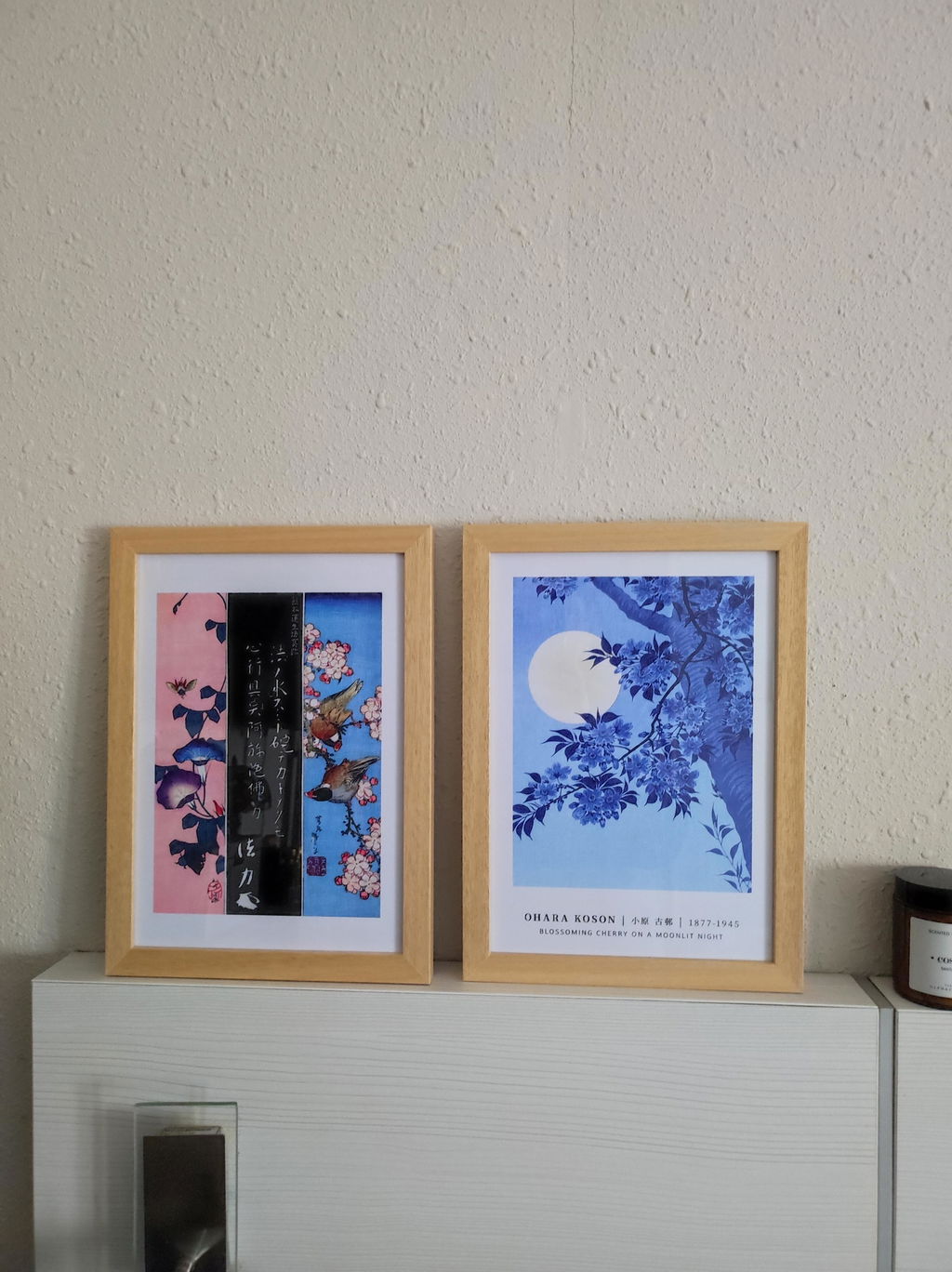
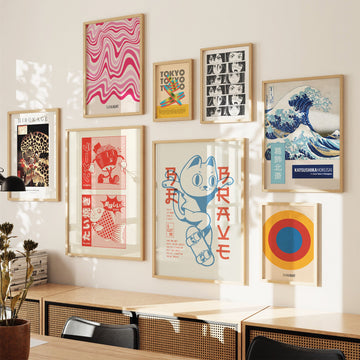
In a calm interior, a print like this works as a counterpoint. Japandi and scandinavian rooms tend toward stillness, and one concentrated burst of energy — in a study, an office, a hallway — gives the eye somewhere to go. Hung alone against a plain wall, the hero holds his storm inside the frame and lets the rest of the room stay quiet.
The artwork is offered as a print on thick snow-white paper, as a framed print in a wooden frame, or on artist-quality satin canvas. Every piece is hand-finished in Europe.
Frequently asked questions
What is the Suikoden?
Suikoden is the Japanese reading of the Chinese novel “Water Margin”, the tale of 108 outlaw heroes who band together against corrupt officials. The story was hugely popular in Edo-period Japan.
Who is Kinhyōshi Yōrin?
Kinhyōshi Yōrin is the Japanese name of Yang Lin, one of the 108 heroes of the Suikoden. Kuniyoshi shows him in a dramatic pose, sword in hand, with a fur cloak and storm-driven weather around him.
Why does this series matter?
“One Hundred and Eight Heroes of the Popular Suikoden”, begun around 1827, was the breakthrough that established Kuniyoshi as the leading designer of warrior prints, or musha-e.
Does a warrior print fit a calm interior?
Yes, as a deliberate accent. One dramatic sheet against a plain wall gives a japandi or scandinavian room a focused point of energy without disturbing its overall quiet.
<< Read Less
Japan historical period: Edo 江戸 (1603-1868)
Check out other artwork of Utagawa Kuniyoshi
#Autumn
•
#Cloak
•
#Dramatic Pose
•
#Dynamic
•
#Fur Cloak
•
#Hat
•
#Japanese History
•
#Japanese Woodblock Print
•
#Musha-E
•
#Samurai
•
#Storm
•
#Sword
•
#Traditional Japanese Art
•
#Ukiyo-E
•
#Utagawa Kuniyoshi
•
#Warrior
•
#Warrior Print