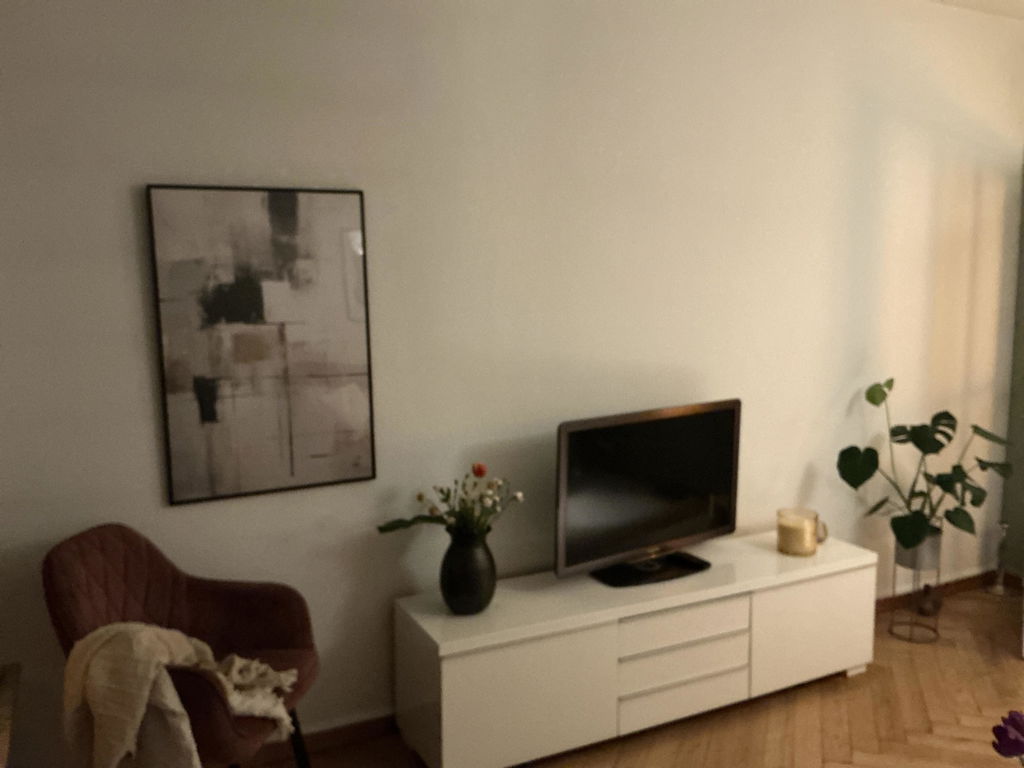
Geometric abstraction in the line of constructivism — Rodchenko, El Lissitzky — distilled into a quiet, contemporary register where each form has weight and keeps room to breathe. The composition reads like architecture: massive blocks, thin connecting lines, the still logic of a floor plan.
Black rectangles anchor the upper field; pale beige forms rise against a cream ground, joined by thin black lines that move like ruled marks across a drafting sheet. Nothing repeats; nothing is symmetrical. The balance comes from weight, not from mirroring.
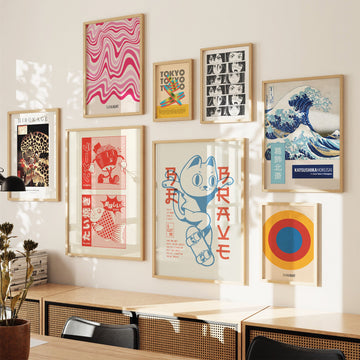
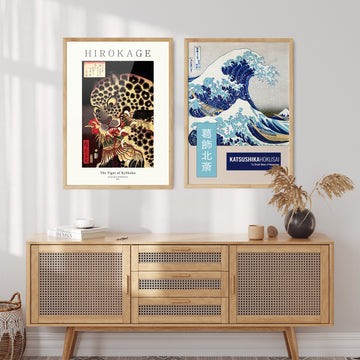
At home in rooms with clean architectural lines — a study, a stairwell, an entrance above a console. It pairs with oak shelving, black ironwork, white render and pale linen. It carries a long wall on its own or hangs as a counterpoint to a flowing work in the same room.
Printed on heavy matte museum-grade paper, framed in solid oak or black ash behind shatter-resistant acrylic, or stretched as a satin cotton canvas ov . . . Read More >>
Geometric abstraction in the line of constructivism — Rodchenko, El Lissitzky — distilled into a quiet, contemporary register where each form has weight and keeps room to breathe. The composition reads like architecture: massive blocks, thin connecting lines, the still logic of a floor plan.
Black rectangles anchor the upper field; pale beige forms rise against a cream ground, joined by thin black lines that move like ruled marks across a drafting sheet. Nothing repeats; nothing is symmetrical. The balance comes from weight, not from mirroring.
At home in rooms with clean architectural lines — a study, a stairwell, an entrance above a console. It pairs with oak shelving, black ironwork, white render and pale linen. It carries a long wall on its own or hangs as a counterpoint to a flowing work in the same room.
Printed on heavy matte museum-grade paper, framed in solid oak or black ash behind shatter-resistant acrylic, or stretched as a satin cotton canvas over a wooden frame. Each format ships ready to hang.
Frequently asked questions
Which style does Urban Geometry belong to?
A contemporary geometric abstraction with roots in early twentieth-century constructivism — the planar logic of Rodchenko and El Lissitzky, reduced to a quiet, Japandi-oriented palette of black, beige and cream.
Why does the composition feel architectural?
The work arranges massive blocks and thin connecting lines the way a floor plan describes a building. There is no perspective and no figure; the architecture is the rhythm of weight against open ground.
Which rooms suit a graphic black-and-cream work?
Studies, entrances, stairwells, dining rooms with white render walls. Anywhere the joinery and lines of the room are already clean — the work reinforces that geometry rather than competing with it.
Which formats are available?
Poster on fine-art matte paper, framed print in oak or black ash behind shatter-resistant acrylic, or satin cotton canvas on a wooden frame. All printed to order in Europe with archival pigment inks.
<< Read Less
#Abstract
•
#Abstract Constructivism
•
#Abstract Minimalist
•
#Geometric
•
#Minimalist