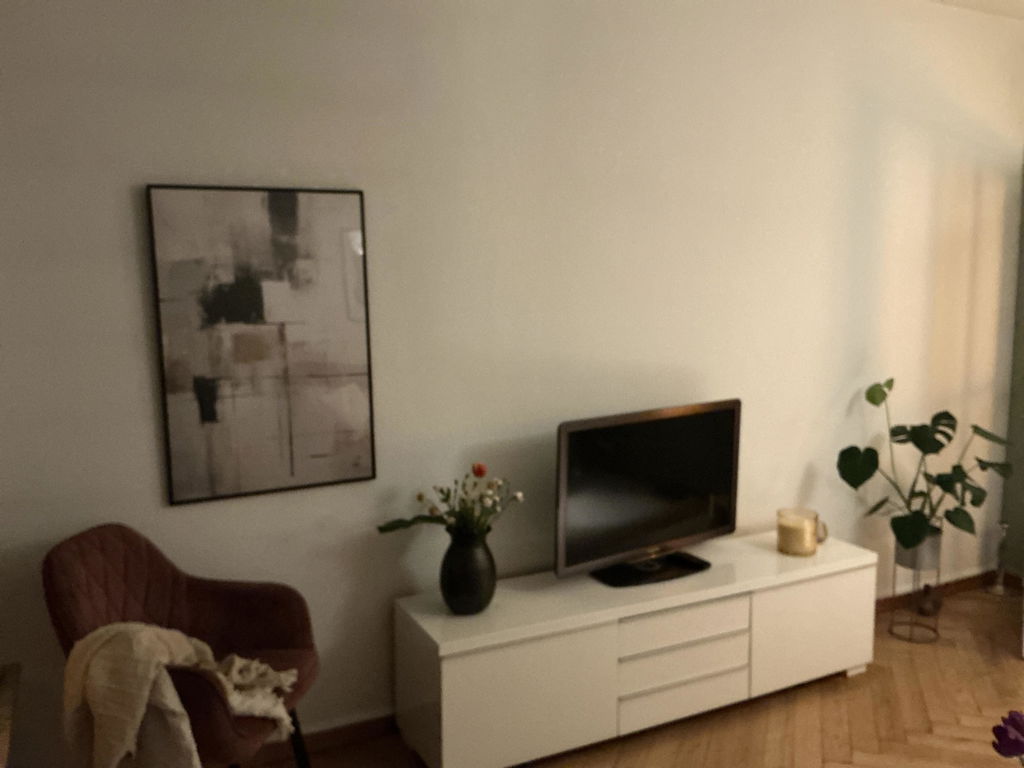
Geometric abstraction with the hand of expressionism — block forms built from dense, deliberate brushstrokes in earthy neutrals. The work reads like a city wall seen up close: planes of render, painted-over patches, the slow record of weather and time. It sits between hard architecture and the texture of a painted surface.
Rectangular fields in oat, cocoa and stone layer against one another with the calm of a Diebenkorn cityscape. The brushwork stays visible throughout — no smooth fills — so that each block carries weight and a small narrative of its making. The edges are deliberate but never mechanical.
At home in rooms that want texture without ornament — a kitchen with concrete worktops, a hallway in raw render, a study above a brushed-steel desk. It pairs with reclaimed wood, undyed linen, blackened steel and natural stone. A firm anchor for an otherwise bare wall.
Printed on heavy matte museum-grade paper, framed in solid oak or black ash behind shatter . . . Read More >>
Geometric abstraction with the hand of expressionism — block forms built from dense, deliberate brushstrokes in earthy neutrals. The work reads like a city wall seen up close: planes of render, painted-over patches, the slow record of weather and time. It sits between hard architecture and the texture of a painted surface.
Rectangular fields in oat, cocoa and stone layer against one another with the calm of a Diebenkorn cityscape. The brushwork stays visible throughout — no smooth fills — so that each block carries weight and a small narrative of its making. The edges are deliberate but never mechanical.
At home in rooms that want texture without ornament — a kitchen with concrete worktops, a hallway in raw render, a study above a brushed-steel desk. It pairs with reclaimed wood, undyed linen, blackened steel and natural stone. A firm anchor for an otherwise bare wall.
Printed on heavy matte museum-grade paper, framed in solid oak or black ash behind shatter-resistant acrylic, or stretched as a satin cotton canvas over a wooden frame. Each format ships ready to hang.
Frequently asked questions
Which style does Urban Fragments belong to?
A contemporary blend of geometric abstraction and abstract expressionism — block forms with visible, painterly brushwork. The lineage runs through Richard Diebenkorn's Ocean Park paintings and the softly geometric strand of postwar American abstraction.
What does it depict?
Nothing literal. The blocks read like built surfaces — a render wall, a stack of painted panels — but the real subject is the surface itself: paint, weight, edge.
Which palettes does it suit?
Earthy neutrals — oat, taupe, cocoa, soft white. Reclaimed or pale wood, blackened metal, natural stone. It works in warm and cool rooms alike, because the painting itself sits in the neutral range.
Which formats are available?
Poster on fine-art matte paper, framed print in oak or black ash behind shatter-resistant acrylic, or satin cotton canvas on a wooden frame. All printed to order in Europe with archival pigment inks.
<< Read Less
#Abstract
•
#Abstract Expressionism
•
#Abstract Patchwork
•
#Expressionism
•
#Minimalist
•
#Modern