A pale circle — the colour of sun-bleached sand — sits just above the centre line of the composition, held by a series of horizontal bands that shift between near-white and near-black. The bands read as water: the condensed reflection of a deep sky in still water, or the moment just before sunrise, when the horizon is a stack of thin light. The circle itself is not the sun — it has the quality of a moon or its memory, and the horizontal bands beneath it shift and condense like slow tidal movement. In Japanese landscape composition, the motif of disc and line is ancient: it appears in lacquerwork, in ukiyo-e skies and in the clean graphic grammar of Edo-period book design.
This is a contemporary studio image that joins the geometric clarity of the Japanese graphic tradition with the Scandinavian preference for restrained tonal contrast. Printed on high-quality archival paper, the composition holds its precision at every size.
The horizontal banding and centred circ . . . Read More >>
A pale circle — the colour of sun-bleached sand — sits just above the centre line of the composition, held by a series of horizontal bands that shift between near-white and near-black. The bands read as water: the condensed reflection of a deep sky in still water, or the moment just before sunrise, when the horizon is a stack of thin light. The circle itself is not the sun — it has the quality of a moon or its memory, and the horizontal bands beneath it shift and condense like slow tidal movement. In Japanese landscape composition, the motif of disc and line is ancient: it appears in lacquerwork, in ukiyo-e skies and in the clean graphic grammar of Edo-period book design.
This is a contemporary studio image that joins the geometric clarity of the Japanese graphic tradition with the Scandinavian preference for restrained tonal contrast. Printed on high-quality archival paper, the composition holds its precision at every size.
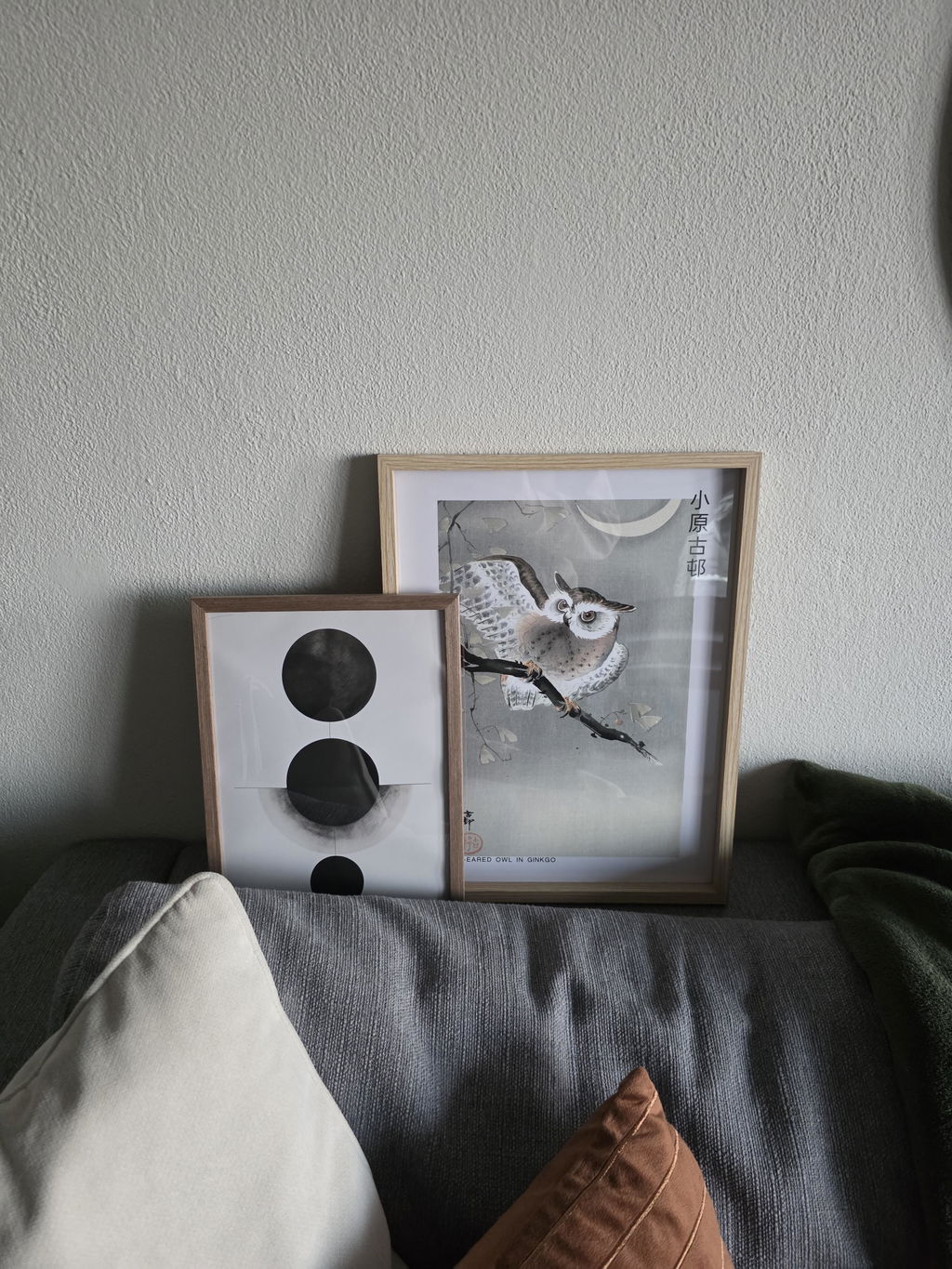
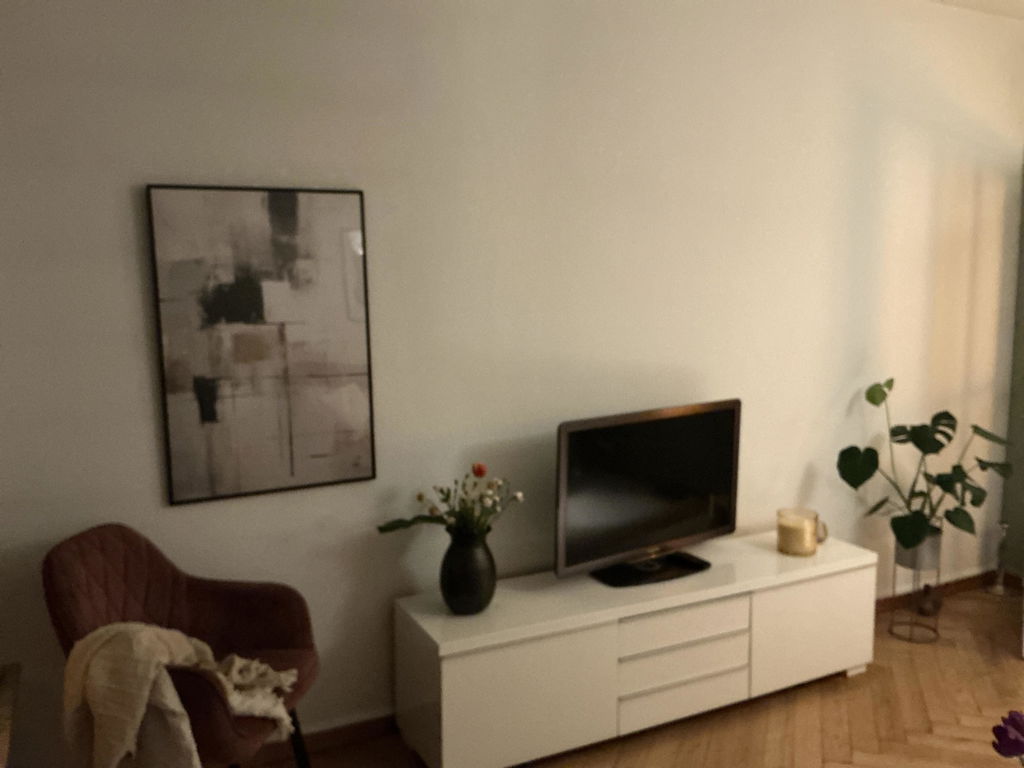
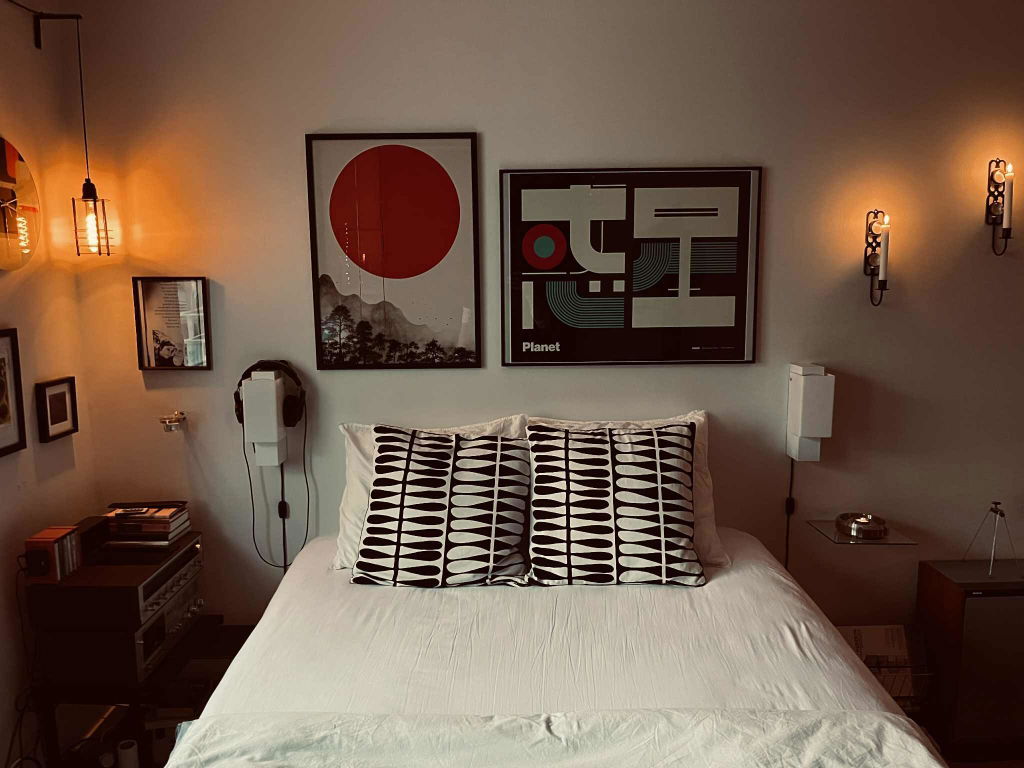
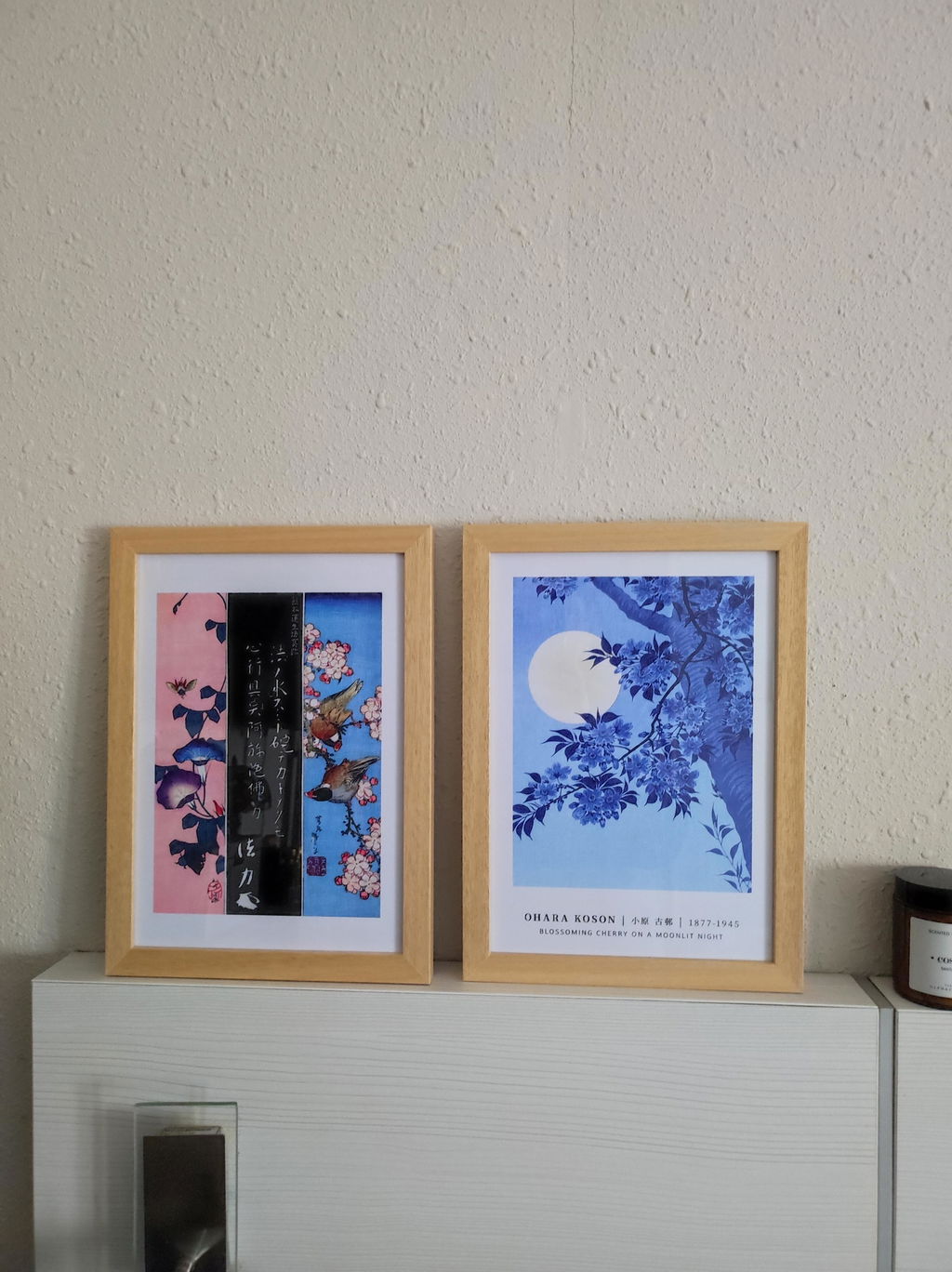
The horizontal banding and centred circle give the work a naturally centring, grounding effect — it sits well above a low sideboard, a bed or a sofa, where the viewer meets it directly rather than in passing. The black-and-white palette with a single soft tone is highly adaptable and works well in warm and cool interiors alike.
Available as an art print on acid-free paper, as a framed print behind shatter-resistant acrylic, or as a satin cotton canvas on a solid wooden frame, ready to hang.
Frequently asked questions
What does the composition show?
A pale circular disc — recalling a moon or sun — rises above a series of alternating black and near-white horizontal bands. The bands evoke water, horizons or the layered light of early morning.
Which visual tradition does this work draw on?
The motif of disc and line has a long history in Japanese decorative art — it appears in Edo-period lacquerwork, ukiyo-e prints and book design. This contemporary work reformulates that grammar in a minimal, Scandinavian-influenced register.
Where does it work best in the home?
Its horizontal composition and centred, symmetrical form make it ideal above a bed, sofa or sideboard. The high-contrast palette reads well in both brightly and dimly lit rooms.
Which sizes and formats are available?
Available in several standard sizes in three formats — art poster, framed art print and canvas. All size and format combinations are listed on the product page.
<< Read Less
#Abstract
•
#Abstract Minimalist
•
#Geometric
•
#Geometric Minimalist
•
#Minimalist