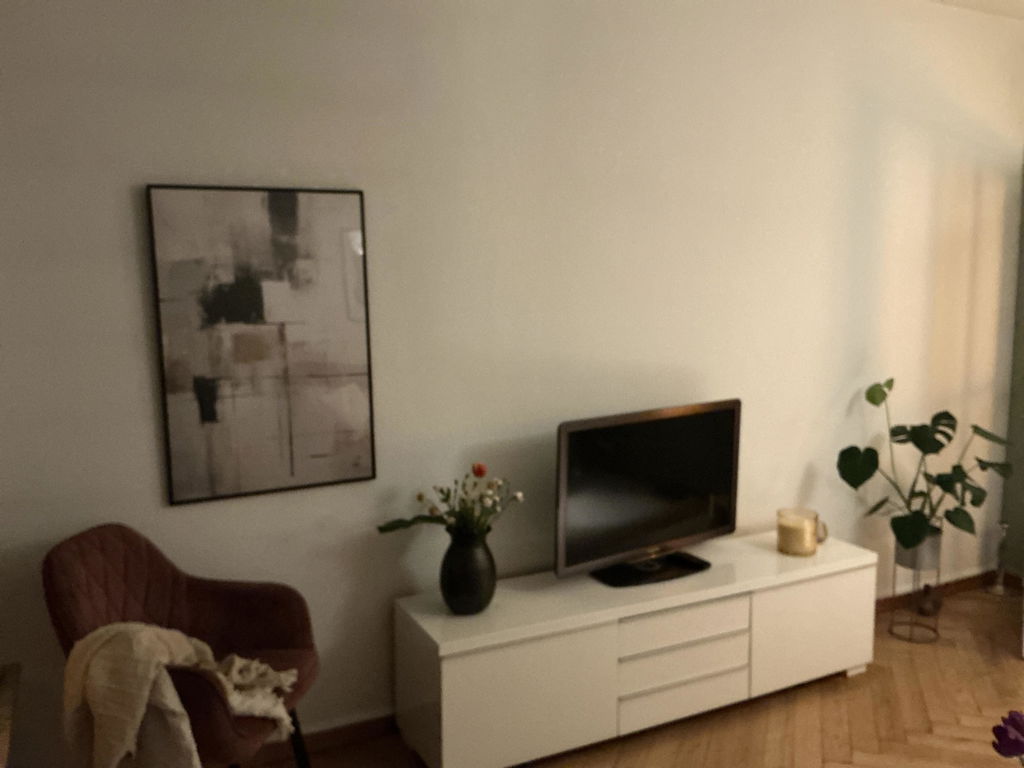
Geometric patchwork in painterly brushwork — rectangles and squares set against each other in muted neutrals with soft pink accents. The work belongs to a contemporary strand of painterly geometry: suprematist composition, warmed by visible brush marks and a quiet pastel register.
Each block is its own field — beige, oat, dusk rose, faded grey — and each carries the texture of the brush that made it. The edges are set but not machined; one block leans against the next like patched cloth along a seam. The pink stays a gentle accent, not the subject.
It settles into rooms that mix structure and softness — a living room with linen upholstery and a clean console, a bedroom against pale wood, a hallway above a low oak bench. It sits with raw linen, undyed wool, brushed brass and matte ceramic. It carries a broad wall on its own, or balances a graphic black-and-cream work in the same room.
Printed on heavy matte museum-grade paper, framed in solid oak or black ash . . . Read More >>
Geometric patchwork in painterly brushwork — rectangles and squares set against each other in muted neutrals with soft pink accents. The work belongs to a contemporary strand of painterly geometry: suprematist composition, warmed by visible brush marks and a quiet pastel register.
Each block is its own field — beige, oat, dusk rose, faded grey — and each carries the texture of the brush that made it. The edges are set but not machined; one block leans against the next like patched cloth along a seam. The pink stays a gentle accent, not the subject.
It settles into rooms that mix structure and softness — a living room with linen upholstery and a clean console, a bedroom against pale wood, a hallway above a low oak bench. It sits with raw linen, undyed wool, brushed brass and matte ceramic. It carries a broad wall on its own, or balances a graphic black-and-cream work in the same room.
Printed on heavy matte museum-grade paper, framed in solid oak or black ash behind shatter-resistant acrylic, or stretched as a satin cotton canvas over a wooden bar. Each option arrives ready to hang.
Frequently asked questions
What style does Rose Mosaic belong to?
A contemporary painterly patchwork — geometric blocks of visible brushwork in muted neutrals with soft pink accents. It sits between suprematist composition and the soft-geometric strand of postwar abstract painting, brought into a quiet japandi palette.
How present is the pink in person?
Kept quiet. The pink reads as an accent against beige, oat and grey, not as a dominant colour, so the work feels warm without reading feminine. In bright light the pink lifts gently; in low light it draws closer to the surrounding neutrals.
What does it pair with?
Raw linen, undyed wool, pale or mid-toned wood (oak, ash), brushed brass, matte ceramic. It works in rooms that already balance structure and softness, and complements both graphic-geometric and fluid abstract works.
Which formats are available?
A poster on heavy matte fine-art paper, a framed print in oak or black ash behind shatter-resistant acrylic, or a satin cotton canvas on a wooden stretcher. All printed to order in Europe with archival pigment inks.
<< Read Less
#Abstract
•
#Abstract Expressionism
•
#Abstract Patchwork
•
#Expressionism
•
#Modern
•
#Pastel