Morning Veil holds a fluid landscape that hovers between misty mountain line and desert dune — soft flowing shapes resolved into a low, lateral movement across the field. The composition belongs to the East Asian suiboku-ga ink-wash tradition (where wet pigment does the work of form) and to the Japanese suminagashi practice of floating ink on a water surface, documented since the twelfth century. Mid-century soak-stain painters — Helen Frankenthaler (from 1952), Morris Louis's Veils (1958–60) — carried a related approach into Western painting.
The technique is wet-in-wet wash without any contour. Forms emerge through tonal weight and the slow movement of pigment across damp paper. The palette is dust, pale sand, soft mauve-grey and a deep band of warmer beige. The lateral movement is the subject: nothing fixes the landscape to a particular place.
The print belongs in rooms that value quiet — bedrooms, reading corners, hallways, softly lit entrances. The pale earth . . . Read More >>
Morning Veil holds a fluid landscape that hovers between misty mountain line and desert dune — soft flowing shapes resolved into a low, lateral movement across the field. The composition belongs to the East Asian suiboku-ga ink-wash tradition (where wet pigment does the work of form) and to the Japanese suminagashi practice of floating ink on a water surface, documented since the twelfth century. Mid-century soak-stain painters — Helen Frankenthaler (from 1952), Morris Louis's Veils (1958–60) — carried a related approach into Western painting.
The technique is wet-in-wet wash without any contour. Forms emerge through tonal weight and the slow movement of pigment across damp paper. The palette is dust, pale sand, soft mauve-grey and a deep band of warmer beige. The lateral movement is the subject: nothing fixes the landscape to a particular place.
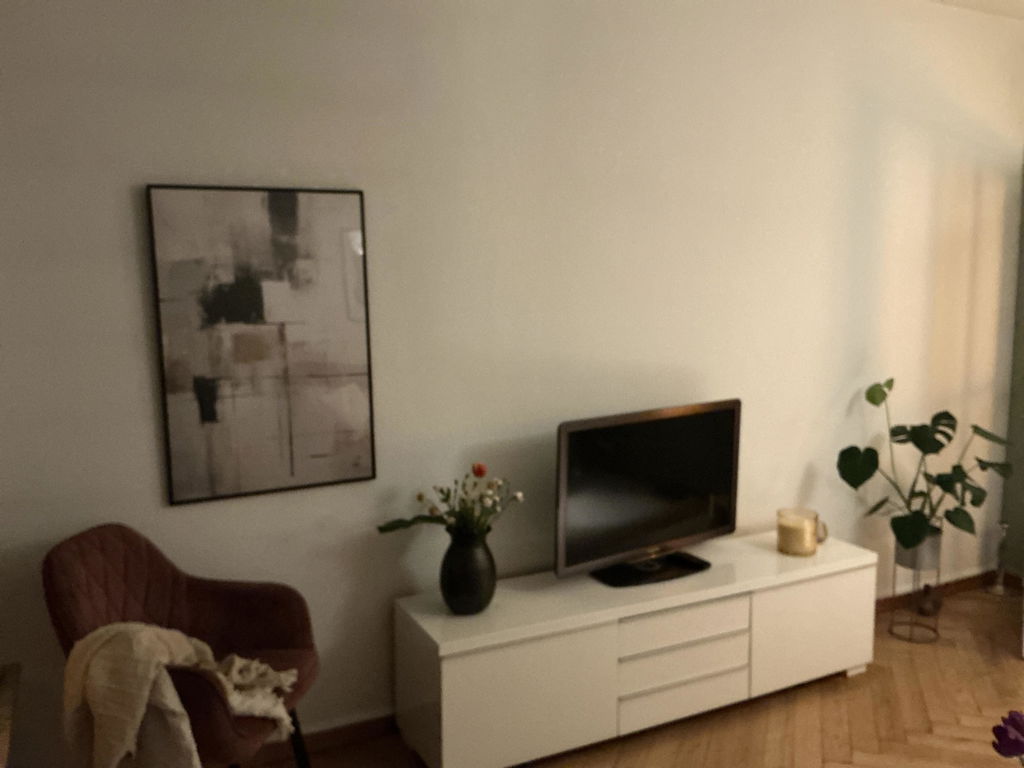
The print belongs in rooms that value quiet — bedrooms, reading corners, hallways, softly lit entrances. The pale earth-toned palette sits naturally with limewash, light oak, undyed linen and unglazed ceramic. The horizontal composition rewards a wider wall.
Available as a fine-art print on quality paper, as a framed print behind shatter-resistant acrylic glazing, or as a satin-coated cotton canvas stretched over a solid wooden frame and ready to hang.
Frequently asked questions
What does Morning Veil show?
Soft flowing shapes that hover between misty mountain line and desert dune, resolved into low lateral movement across the field, in a palette of dust, sand, mauve-grey and warm beige.
Which traditions shape the work?
The East Asian suiboku-ga ink wash, the Japanese suminagashi (ink on water, documented since the twelfth century), and mid-century soak-stain painting (Frankenthaler from 1952; Morris Louis's Veils, 1958–60).
Is the work meant to show mountains or dunes?
Deliberately open. The same flowing shapes read as mist-wrapped mountain ranges or low dunes, depending on the viewer and the surrounding interior.
Where does the print sit well at home?
In bedrooms, reading corners, softly lit hallways and entrance halls, paired with limewash, oak, undyed linen and unglazed ceramic.
<< Read Less
#Abstract
•
#Abstract Watercolor
•
#Foggy Ridge
•
#Landscape
•
#Minimalist
•
#Modern
•
#Warm
•
#Watercolor