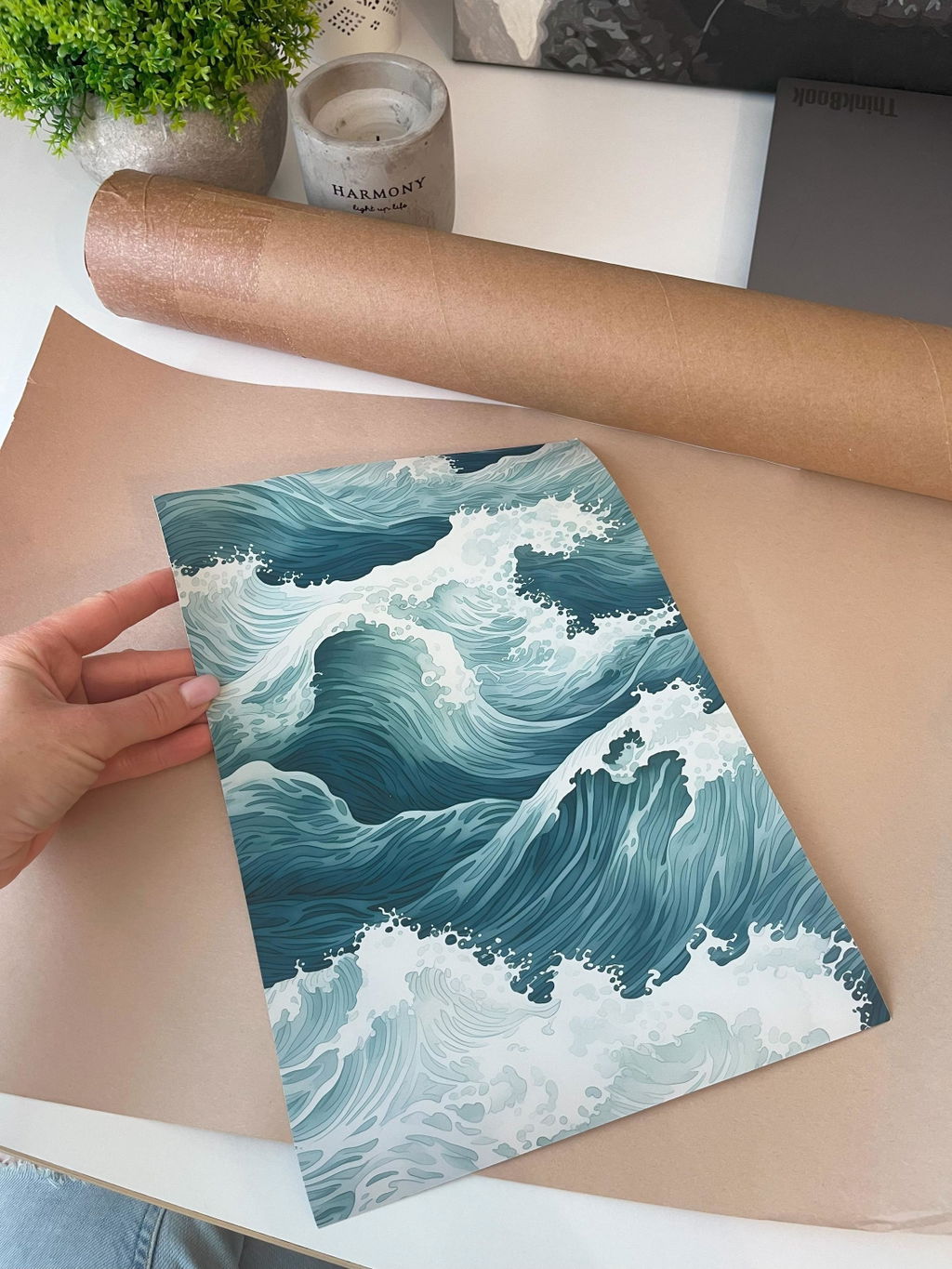
A watercolour abstraction shaped by the language of water and stone. The work stands in the tradition of fluid abstraction — Helen Frankenthaler's soak-stain, Sam Francis' bleeding fields of colour — shifted into a quieter, Japandi-toned register where each transition reads like a breath.
Glazing washes meet at gentle ridges and dissolve into one another, the way marble forms as liquid mineral folds back on itself across geological time. No hard edges; the contour appears where one tone yields to the next. The palette stays in cool, mineral neutrals — pale ash, dove grey, hints of slate.
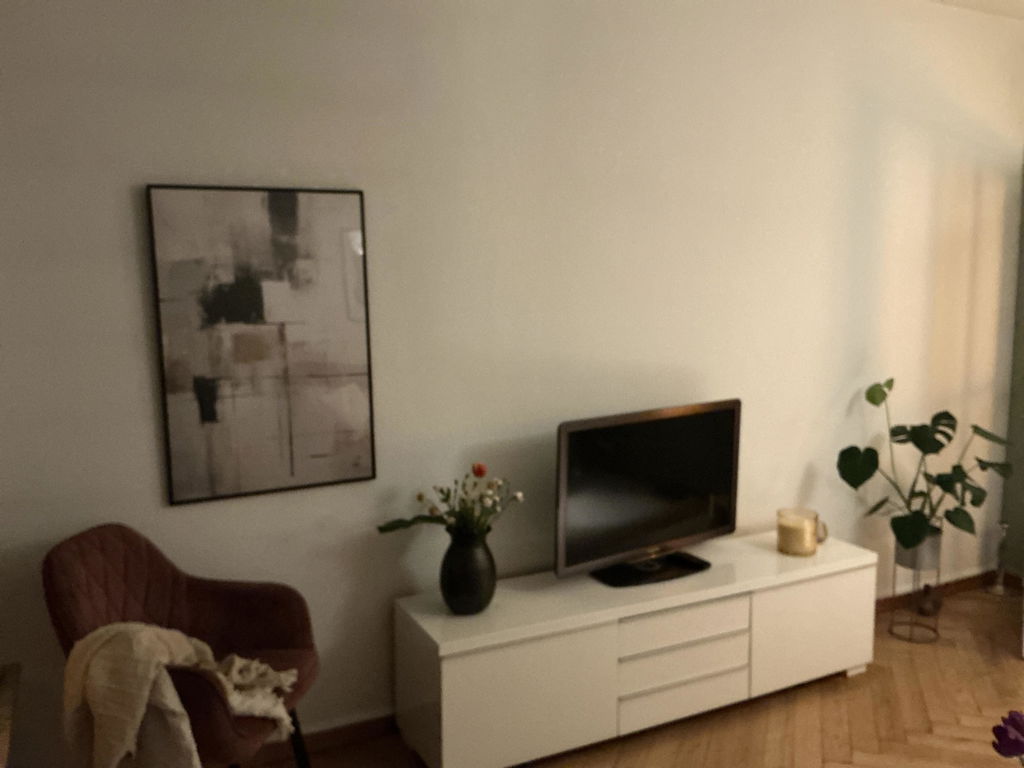
It finds its place in rooms with smooth surfaces and incoming daylight. Above a bath or a basin, where the watery subject finds a quiet echo. Above a low bench in an entryway, in a study above a paper-shaded lamp, in a bedroom against light wood and undyed linen. Quiet enough to live beneath every day.
Printed on heavy matte museum-quality paper, framed in solid oak or black . . . Read More >>
A watercolour abstraction shaped by the language of water and stone. The work stands in the tradition of fluid abstraction — Helen Frankenthaler's soak-stain, Sam Francis' bleeding fields of colour — shifted into a quieter, Japandi-toned register where each transition reads like a breath.
Glazing washes meet at gentle ridges and dissolve into one another, the way marble forms as liquid mineral folds back on itself across geological time. No hard edges; the contour appears where one tone yields to the next. The palette stays in cool, mineral neutrals — pale ash, dove grey, hints of slate.
It finds its place in rooms with smooth surfaces and incoming daylight. Above a bath or a basin, where the watery subject finds a quiet echo. Above a low bench in an entryway, in a study above a paper-shaded lamp, in a bedroom against light wood and undyed linen. Quiet enough to live beneath every day.
Printed on heavy matte museum-quality paper, framed in solid oak or black ash behind shatter-resistant acrylic, or as a satin cotton canvas stretched over a wooden frame. Each variant arrives ready to hang.
Frequently asked questions
Which style does Liquid Strata belong to?
A contemporary watercolour abstraction that draws on the fluid painting of the mid-twentieth century — Frankenthaler's stained washes, Sam Francis' bleeding fields of colour — rendered in a restrained Japandi palette of cool neutrals.
What does the imagery actually depict?
Nothing literal. The flowing forms read like marble veining or slow-moving water, yet the work stays abstract — the subject is the movement of one wash into the next, not a recognisable object.
Where does a work like this look best?
In rooms with smooth, natural surfaces — bathrooms, bedrooms, studies, dressing areas. It harmonises particularly with stone, light wood and matte ceramic, and gives otherwise empty walls a quiet focal point.
Which formats are available?
A poster on fine-art matte paper, a framed print in oak or black ash with shatter-resistant acrylic, or a satin cotton canvas on a wooden frame. All printed in Europe to order with archival pigment inks.
<< Read Less
#Abstract
•
#Abstract Fluid
•
#Abstract Watercolor
•
#Fluid
•
#Watercolor