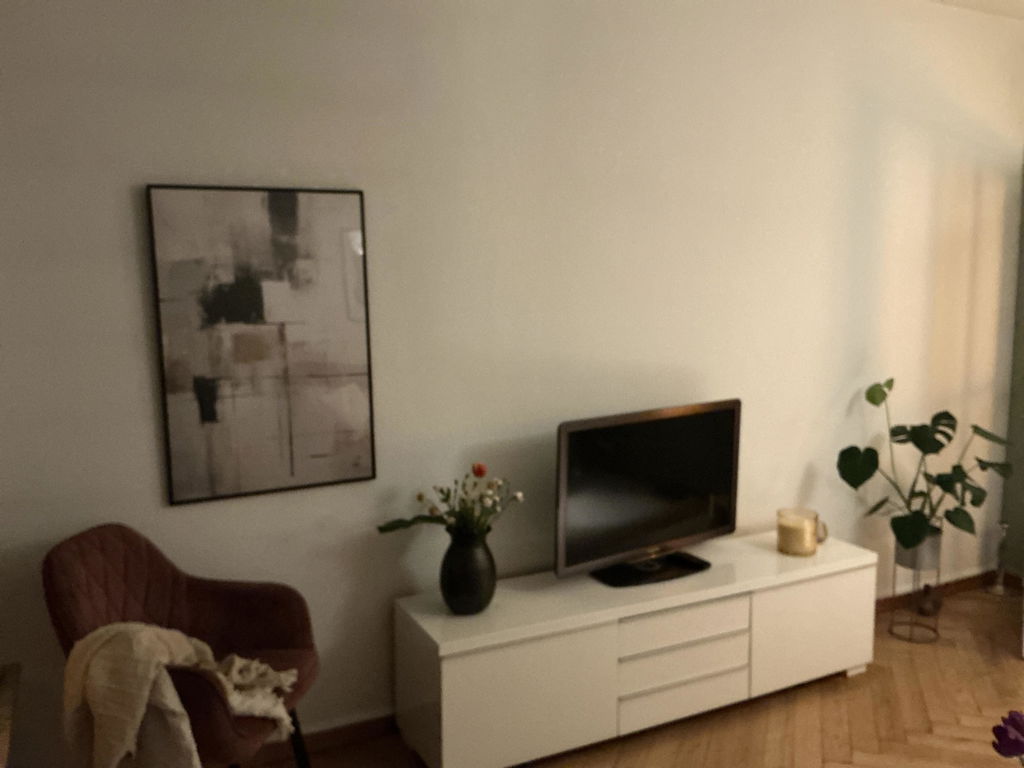
Gestural abstraction in soft gold — delicate flowing lines that move with the unforced logic of action painting, drawn into a calm Japandi register. The work sits between the calligraphic line of East Asian sumi-e and the open gesture of Western post-war abstraction.
Pale washes of warm gold meet thin, curved marks that swing across the field. The line is continuous in spirit — a single sustained movement — even where it sets down and rests. The colour stays soft; the gesture stays articulate. Nothing demands attention; the work simply stays in motion as you look.
It finds its place in rooms that favour quiet warmth — a living room with linen upholstery, a dining room with a long oak table, a bedroom against a pale plaster wall. It pairs with brushed brass, raw silk, undyed wool, and light wood. Particularly effective as a single work above a sideboard or a low bench.
Printed on heavy matte paper of museum quality, framed in solid oak or black ash behind sha . . . Read More >>
Gestural abstraction in soft gold — delicate flowing lines that move with the unforced logic of action painting, drawn into a calm Japandi register. The work sits between the calligraphic line of East Asian sumi-e and the open gesture of Western post-war abstraction.
Pale washes of warm gold meet thin, curved marks that swing across the field. The line is continuous in spirit — a single sustained movement — even where it sets down and rests. The colour stays soft; the gesture stays articulate. Nothing demands attention; the work simply stays in motion as you look.
It finds its place in rooms that favour quiet warmth — a living room with linen upholstery, a dining room with a long oak table, a bedroom against a pale plaster wall. It pairs with brushed brass, raw silk, undyed wool, and light wood. Particularly effective as a single work above a sideboard or a low bench.
Printed on heavy matte paper of museum quality, framed in solid oak or black ash behind shatter-resistant acrylic glass, or as a satin cotton canvas stretched over a wooden frame. Each version arrives ready to hang.
Frequently asked questions
What style does Golden Whirl belong to?
A contemporary gestural abstraction in soft gold — flowing line and pale wash in the lineage of East Asian sumi-e calligraphy and post-war Western action painting, rendered in a calm Japandi palette.
Why is it described as a single sustained gesture?
Because the line reads that way. Even where the marks set down and rest, they follow the visual logic of a single continuous movement of the hand — closer to a calligraphic stroke than to a built-up image.
Which colour schemes pair best with it?
Warm neutrals — bone, oat, soft white — and natural materials (linen, raw silk, undyed wool). Brushed brass and light wood pick up the gold without competing with it; the work gives a cooler room quiet warmth without dictating its palette.
Which formats are available?
A poster on heavy matte fine art paper, a framed print in oak or black ash behind shatter-resistant acrylic glass, or a satin cotton canvas on a wooden stretcher. All printed to order in Europe with archival pigment inks.
<< Read Less
#Abstract
•
#Abstract Expressionism
•
#Abstract Gesture
•
#Expressionism
•
#Fluid
•
#Luxury