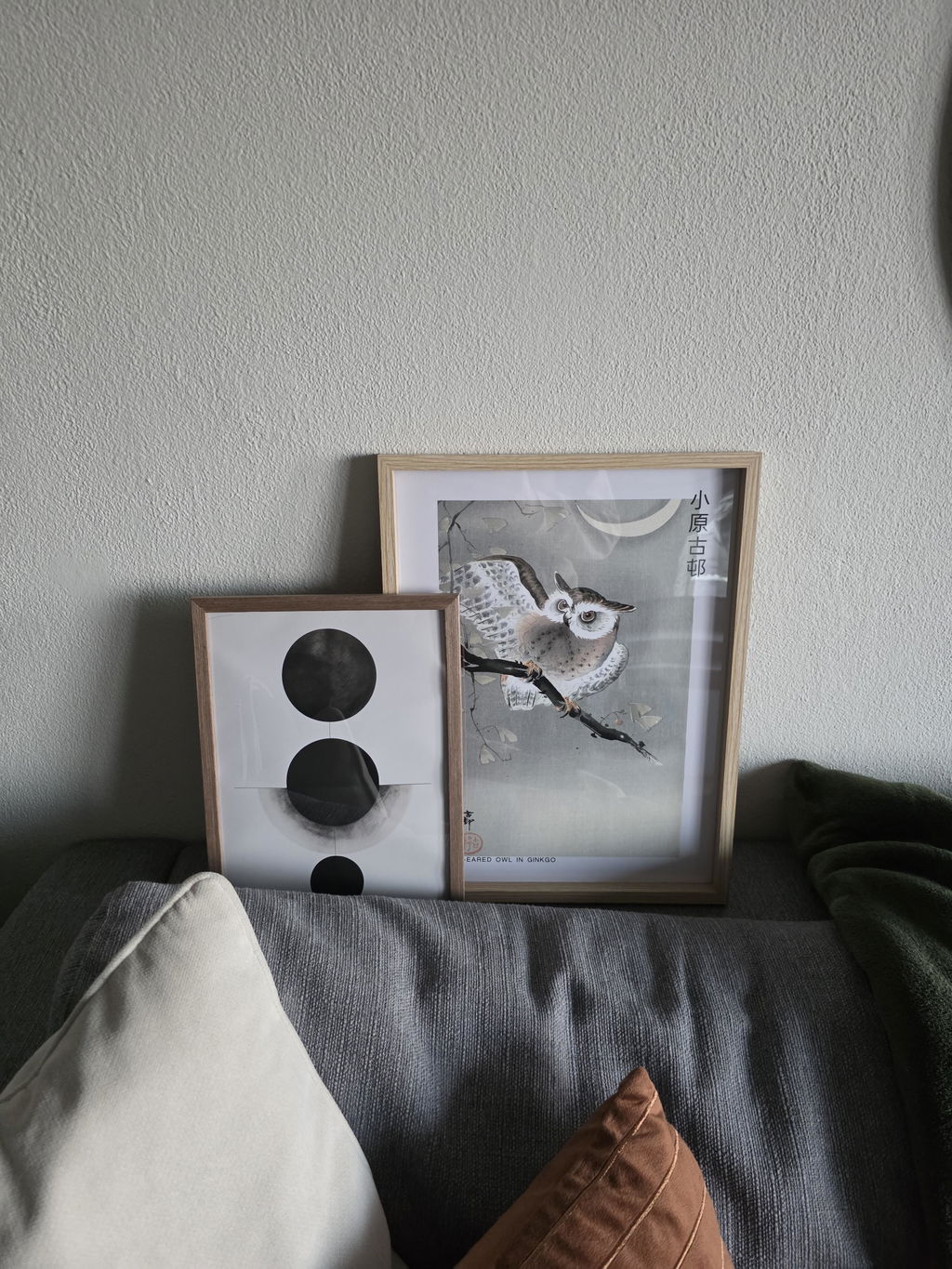
Geometric Eclipse sets two overlapping circles into the field, each carrying its own woodgrain in a different, contrasting tone. Where they cross, the textures meet without blending. The work sits in the line of geometric abstraction — Bauhaus, Concrete art, mid-century Japanese design tradition — read through warm, woodgrained Japandi colour.
The composition rests on two simple decisions: the placement of the circles and the colour pairing. One disc reads warm — wheat, amber or rust — the other as a deeper neutral, often charcoal or aged walnut. The woodgrain pattern within each disc gives the geometry a natural, material feel rather than a flatly printed one.
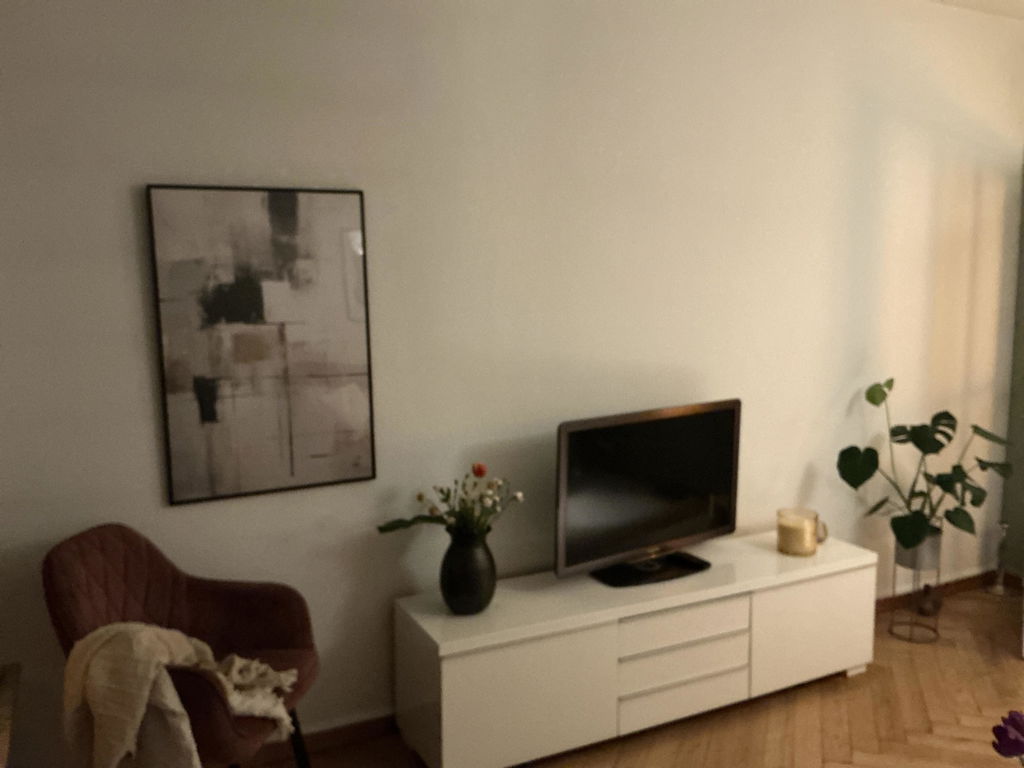
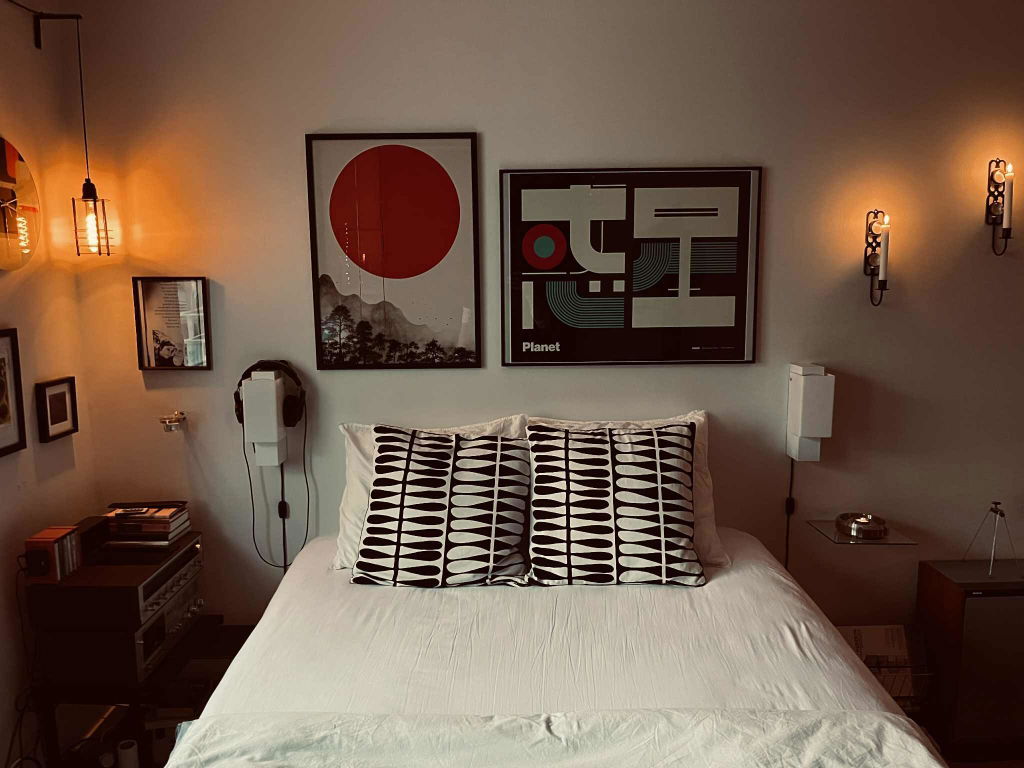
Geometric Eclipse works in living rooms, dining rooms and studies where natural wood is already part of the space. It pairs with oak shelving, mid-century chairs and warm textiles, and reads well above a low sideboard, a dining table or a desk.
Available as a giclée on heavy archival paper, as a fr . . . Read More >>
Geometric Eclipse sets two overlapping circles into the field, each carrying its own woodgrain in a different, contrasting tone. Where they cross, the textures meet without blending. The work sits in the line of geometric abstraction — Bauhaus, Concrete art, mid-century Japanese design tradition — read through warm, woodgrained Japandi colour.
The composition rests on two simple decisions: the placement of the circles and the colour pairing. One disc reads warm — wheat, amber or rust — the other as a deeper neutral, often charcoal or aged walnut. The woodgrain pattern within each disc gives the geometry a natural, material feel rather than a flatly printed one.
Geometric Eclipse works in living rooms, dining rooms and studies where natural wood is already part of the space. It pairs with oak shelving, mid-century chairs and warm textiles, and reads well above a low sideboard, a dining table or a desk.
Available as a giclée on heavy archival paper, as a framed edition behind shatter-resistant acrylic in oak, walnut or black wood, or as a satin cotton canvas on a wooden frame, ready to hang. Each format is produced and shipped within the EU.
Frequently asked questions
What does the work show?
Two overlapping circles on a warm field, each carrying a different woodgrain in contrasting tones — a geometric image with the material feel of natural wood.
Which tradition does it belong to?
The line of geometric abstraction — Bauhaus, Concrete art and mid-century Japanese design — read through warm, woodgrained Japandi colour.
Where does Geometric Eclipse work best?
Living rooms, dining rooms and studies, especially above a low sideboard, a dining table or a desk, in spaces that already use natural wood.
Which formats are offered?
Archival paper poster, framed edition behind shatter-resistant acrylic, and satin cotton canvas on a wooden frame. Produced and shipped within the EU.
<< Read Less
#Abstract
•
#Circle
•
#Geometric
•
#Geometric Abstract
•
#Modern
•
#Tonal Geometry