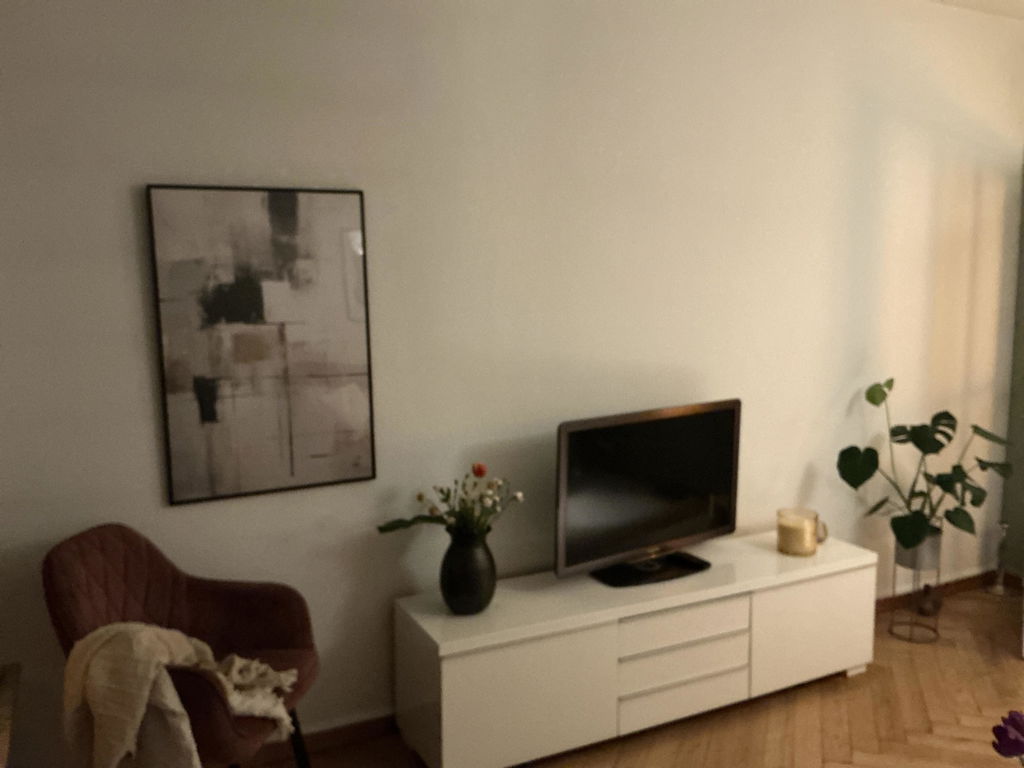
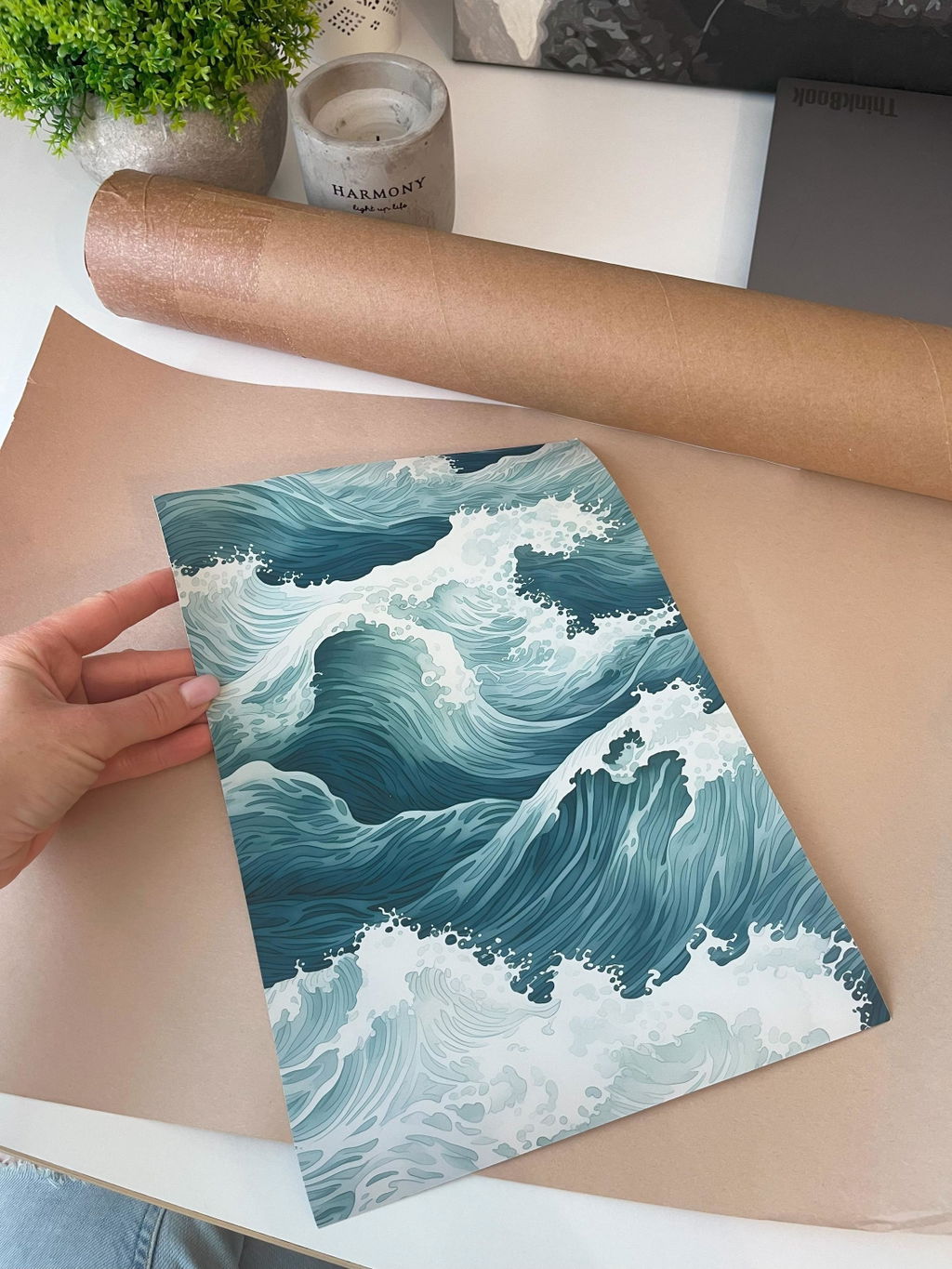
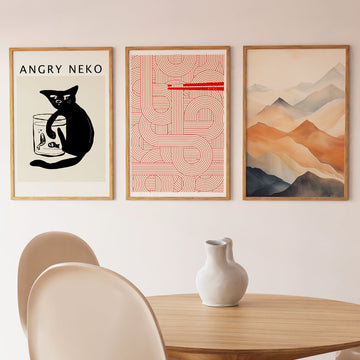
A watercolour abstract in earthen tones — slow, sweeping forms in clay, oat and faded ochre. The work stands in the line of contemporary fluid abstraction, drawn into a Japandi register where movement is kept quiet rather than dramatic.
Pale washes of tone arch across the field, gathering at soft ridges before dissolving again. The pattern reads like slow water moving over silt, or wind over sand: a record of movement, not a rendering of any particular thing. The edges stay soft; the warmth stays muted.
It finds its place in rooms that lean toward natural texture — a living room with linen upholstery, a study in reclaimed wood, a kitchen with clay tile. Pairs with terracotta, jute, undyed cotton and brushed brass. Hangs above a low dresser, beside a tall bookcase, or as a single work on a wide wall.
Printed on heavyweight matte fine art paper, framed in solid oak or black ash behind shatter-resistant acrylic glazing, or as a satin-coated cotton canvas stretc . . . Read More >>
A watercolour abstract in earthen tones — slow, sweeping forms in clay, oat and faded ochre. The work stands in the line of contemporary fluid abstraction, drawn into a Japandi register where movement is kept quiet rather than dramatic.
Pale washes of tone arch across the field, gathering at soft ridges before dissolving again. The pattern reads like slow water moving over silt, or wind over sand: a record of movement, not a rendering of any particular thing. The edges stay soft; the warmth stays muted.
It finds its place in rooms that lean toward natural texture — a living room with linen upholstery, a study in reclaimed wood, a kitchen with clay tile. Pairs with terracotta, jute, undyed cotton and brushed brass. Hangs above a low dresser, beside a tall bookcase, or as a single work on a wide wall.
Printed on heavyweight matte fine art paper, framed in solid oak or black ash behind shatter-resistant acrylic glazing, or as a satin-coated cotton canvas stretched over a wooden bar frame. Each variant arrives ready to hang.
Frequently asked questions
Which style does Earthen Flow belong to?
A contemporary watercolour abstraction in earthen tones — loose, fluid forms in the line of soak-stain painting, held in a calm Japandi palette of clay, oat and faded ochre.
Does it depict a particular landscape?
No. The flowing forms read like slow water, wind-shaped sand or clay sediment, but the work stays abstract. The subject is movement itself, not a specific place.
What pairs with it?
Natural-fibre textiles (linen, jute, undyed cotton), terracotta and unglazed ceramic, reclaimed wood and mid-tone timbers, brushed brass. It also works well against limewashed plaster and clay-paint finishes.
Which formats are available?
Poster on heavyweight matte fine art paper, framed print in oak or black ash behind shatter-resistant acrylic glazing, or satin-coated cotton canvas on a wooden bar frame. All printed to order in Europe with archival pigment inks.
<< Read Less
#Abstract
•
#Abstract Flow
•
#Abstract Watercolor
•
#Watercolor