Creamy Grain Waves belongs to a contemporary line of pattern-making that takes its cues from topographic survey, the study of wood grain and the mid-twentieth-century Scandinavian poster tradition. The Stockholm and Helsinki studios of the 1950s built long-lasting posters from nothing more than repeated contour lines, and Japanese sumi-e had reduced moving water to the same basic rhythm centuries earlier. This composition stands at that quiet intersection.
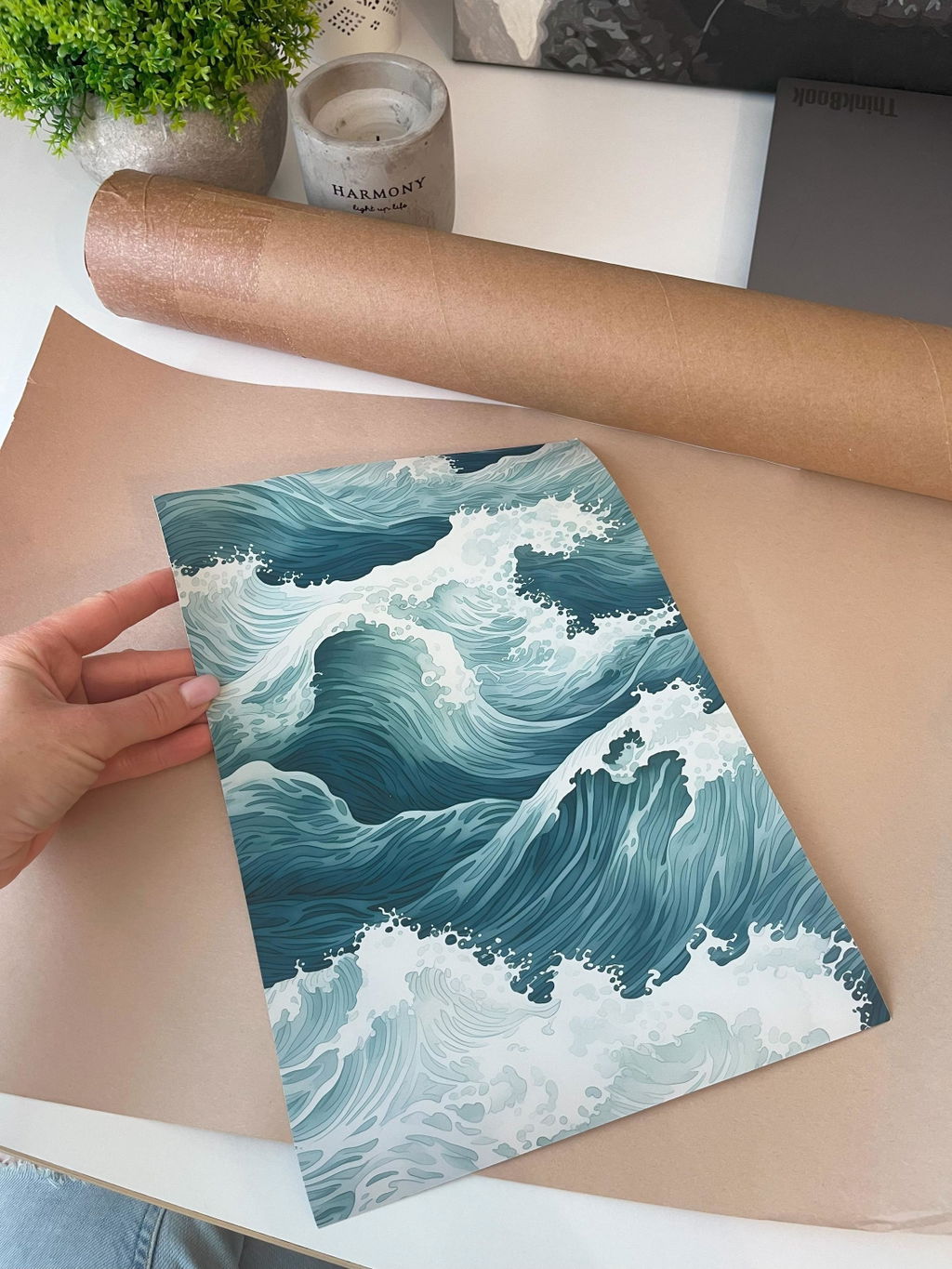
The image is a continuous field of flowing curved lines in soft cream over a warm, sandy ground. The lines turn and close the way wood grain bends around a knot, or the way a topographic map traces an invisible hill. Up close the strokes look lightly grainy; from a distance the surface reads as a quiet rhythm.
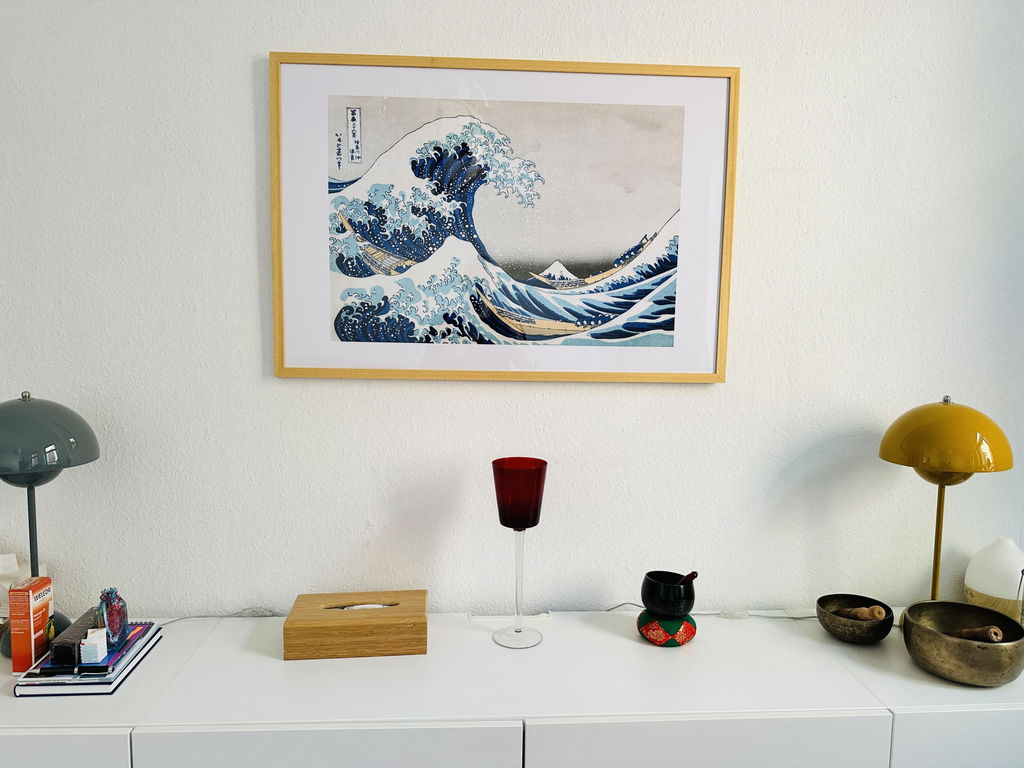
The print slips easily into interiors built from natural materials — light oak, plaster walls, linen and undyed wool. It works well above a sideboard, behind a low sofa or along a staircase wall where the . . . Read More >>
Creamy Grain Waves belongs to a contemporary line of pattern-making that takes its cues from topographic survey, the study of wood grain and the mid-twentieth-century Scandinavian poster tradition. The Stockholm and Helsinki studios of the 1950s built long-lasting posters from nothing more than repeated contour lines, and Japanese sumi-e had reduced moving water to the same basic rhythm centuries earlier. This composition stands at that quiet intersection.
The image is a continuous field of flowing curved lines in soft cream over a warm, sandy ground. The lines turn and close the way wood grain bends around a knot, or the way a topographic map traces an invisible hill. Up close the strokes look lightly grainy; from a distance the surface reads as a quiet rhythm.
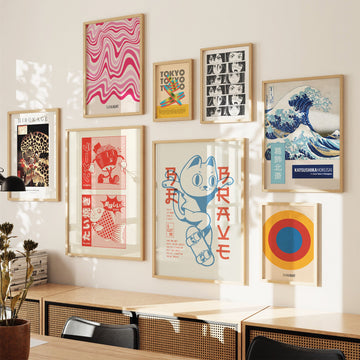
The print slips easily into interiors built from natural materials — light oak, plaster walls, linen and undyed wool. It works well above a sideboard, behind a low sofa or along a staircase wall where the eye travels with it. The palette is warm but restrained; the work does not compete with the rest of the room.
Available as a fine-art paper poster, as a framed print behind shatter-resistant acrylic glazing in a handmade wooden frame, or as a satin-coated cotton canvas on a solid wood frame, ready to hang.
Frequently asked questions
What does Creamy Grain Waves show?
A continuous field of flowing curved lines in soft cream over a sandy ground — the rhythm of wood grain bending around a branch, or of topographic contour lines.
Which design traditions does the print draw on?
On mid-twentieth-century Scandinavian poster design, built from repeated contour lines, as well as the topographic map and the Japanese sumi-e water line.
Where does Creamy Grain Waves work best?
Above a sideboard, behind a low sofa or along a staircase wall — anywhere the warm cream palette works beside light oak, plaster, linen and wool.
In which formats is the print available?
As a fine-art paper poster, as a framed print behind shatter-resistant acrylic glazing in a handmade wooden frame, or as a satin-coated cotton canvas on a solid wood frame, ready to hang.
<< Read Less
#Abstract
•
#Abstract Minimalist
•
#Flow
•
#Minimalist
•
#Nature
•
#Organic
•
#Smooth Grain Waves