This plate from the Collected Illustrations of Japanese Toys (Kyosen Omocha-shu) by Kawasaki Kyosen (1877-1942) shows a white folk horse, the kind of papier-mache or carved toy horse made across Japan and tied to harvest rites and children's festivals. Kyosen drew the regional toys of his country with patient care, and the horse, a recurring favourite, appears here as a single, clearly observed figure.
The sheet is omocha-e, the picture of toys, drawn from life and printed by woodblock. The white body is held mostly in the reserved paper, with restrained colour at the harness and trappings, and the figure stands on bare ground with a red seal at the side. The economy is deliberate; the toy is left to speak for itself.
On a wall the print is calm and characterful. The single pale horse reads cleanly against the open paper and brings a gentle, folk-art note to a room. It suits a child's room, a study, or a hallway, and sits well beside light wood and other simple pr . . . Read More >>
This plate from the Collected Illustrations of Japanese Toys (Kyosen Omocha-shu) by Kawasaki Kyosen (1877-1942) shows a white folk horse, the kind of papier-mache or carved toy horse made across Japan and tied to harvest rites and children's festivals. Kyosen drew the regional toys of his country with patient care, and the horse, a recurring favourite, appears here as a single, clearly observed figure.
The sheet is omocha-e, the picture of toys, drawn from life and printed by woodblock. The white body is held mostly in the reserved paper, with restrained colour at the harness and trappings, and the figure stands on bare ground with a red seal at the side. The economy is deliberate; the toy is left to speak for itself.
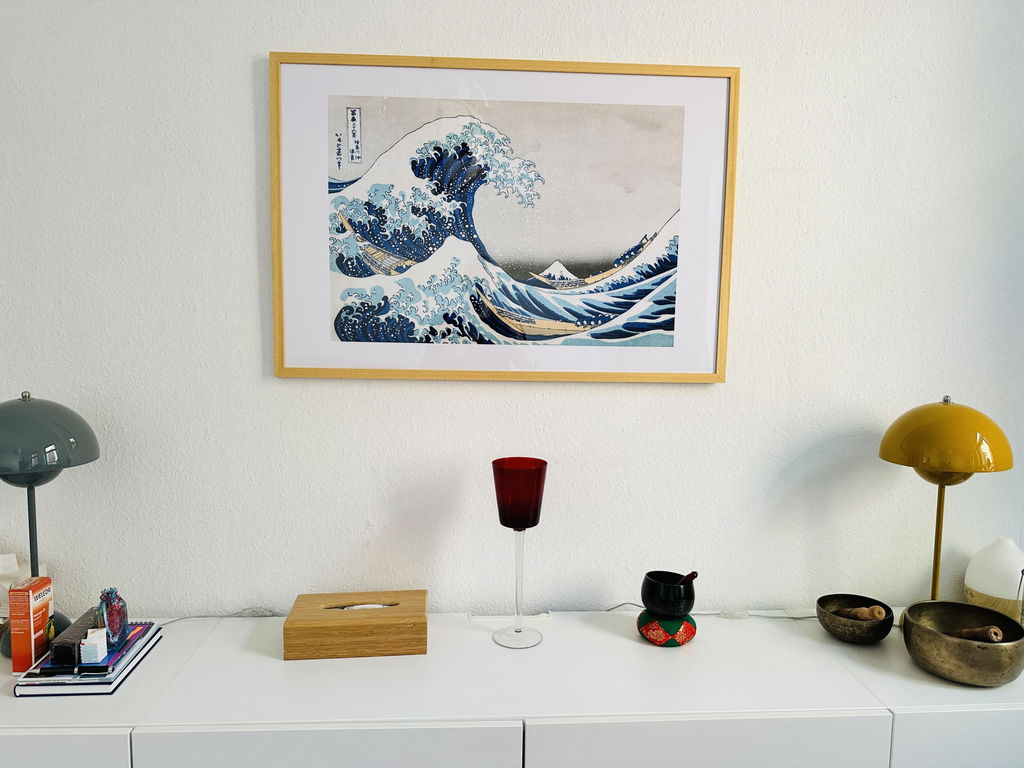
On a wall the print is calm and characterful. The single pale horse reads cleanly against the open paper and brings a gentle, folk-art note to a room. It suits a child's room, a study, or a hallway, and sits well beside light wood and other simple prints.
Available as fine-art paper with a soft matte surface, as a framed edition behind shatter-resistant acrylic, or as satin-coated cotton canvas for a warmer, textile feel.
Frequently asked questions
What does this print show?
A white Japanese folk horse toy, drawn from life with restrained colour at its trappings.
What are these horse toys?
Regional toy horses of papier-mache or carved wood, long linked to harvest rites and children's festivals across Japan.
Where does the image come from?
From Kawasaki Kyosen's Collected Illustrations of Japanese Toys, an album of omocha-e recording the folk toys of early twentieth-century Japan.
Where does it suit best?
In a child's room, a study, or a hallway, where the single pale horse adds a calm, folk-art note.
<< Read Less
Japan historical period: Taisho 大正 (1912-1925)
Check out other artwork of Kawasaki Kyosen
#Classic
•
#Folk
•
#Folk Deity Statuettes
•
#Illustration
•
#Japanese
•
#Japanese Minimalist
•
#Kawasaki Kyosen
•
#Minimalist
•
#Sketch