This plate from the Collected Illustrations of Japanese Toys (Kyōsen Omocha-shū) by Kawasaki Kyosen (1877–1942) pairs a standing folk doll in a flowered kimono with a small reclining boy figure in red set below. Kyosen gave his career to recording the dolls and toys of Japan, and this gentle contrast of a poised upright doll and a relaxed small figure is typical of the everyday playthings he gathered.
The sheet is omocha-e, the picture of toys, drawn from life and printed by woodblock. The kimono is set in soft reds and a fine pattern against open paper, the reclining figure laid in clear flat colour below, and a red seal placed at the side. The line is calm and the colour restrained, leaving the dolls' bearing to carry the image.
On a wall the print is poised and unhurried. The standing doll reads cleanly against the pale ground, and the small reclining figure softens the composition. It suits a bedroom, a dressing area, or a quiet sitting room, and sits well bes . . . Read More >>
This plate from the Collected Illustrations of Japanese Toys (Kyōsen Omocha-shū) by Kawasaki Kyosen (1877–1942) pairs a standing folk doll in a flowered kimono with a small reclining boy figure in red set below. Kyosen gave his career to recording the dolls and toys of Japan, and this gentle contrast of a poised upright doll and a relaxed small figure is typical of the everyday playthings he gathered.
The sheet is omocha-e, the picture of toys, drawn from life and printed by woodblock. The kimono is set in soft reds and a fine pattern against open paper, the reclining figure laid in clear flat colour below, and a red seal placed at the side. The line is calm and the colour restrained, leaving the dolls' bearing to carry the image.
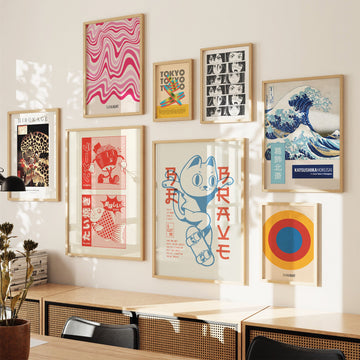
On a wall the print is poised and unhurried. The standing doll reads cleanly against the pale ground, and the small reclining figure softens the composition. It suits a bedroom, a dressing area, or a quiet sitting room, and sits well beside pale wood and other calm prints.
Each print is made to order on thick, smooth fine-art paper, framed behind shatter-resistant acrylic, or as a satin-coated cotton canvas. Choose the format that suits your wall.
Frequently asked questions
What does this print show?
A standing folk doll in a flowered kimono with a small reclining boy figure in red below, drawn from life.
What kind of dolls are these?
Regional Japanese folk dolls (ningyō) of clay, wood, or papier-mâché, kept and exchanged as toys and charms.
Where does the image come from?
From Kawasaki Kyosen's Collected Illustrations of Japanese Toys, an album of omocha-e recording the folk toys of early twentieth-century Japan.
Where does it suit best?
In a bedroom, a dressing area, or a quiet sitting room, where the poised standing doll adds a calm, graceful note.
<< Read Less
Japan historical period: Taisho 大正 (1912-1925)
Check out other artwork of Kawasaki Kyosen
#Classic
•
#Doll
•
#Folk
•
#Illustration
•
#Japanese
•
#Japanese Folk‐Toy Illustration
•
#Japanese Traditional
•
#Japanese Woodblock Print
•
#Kawasaki Kyosen
•
#Kimono
•
#Sketch
•
#Ukiyo-E