Gosōtei Hirosada was an Osaka-school ukiyo-e artist active in the mid-19th century, best known for ōkubi-e — large-head theatrical portraits drawn from the Kamigata kabuki stage. The original print this piece is taken from, dating to 1852, lifts a Kasa-obake from kabuki and folk tradition: a one-legged umbrella spirit (a member of the broader yōkai family) that hops on a single sandaled foot, mouth wide and tongue out, a paper parasol for a body.
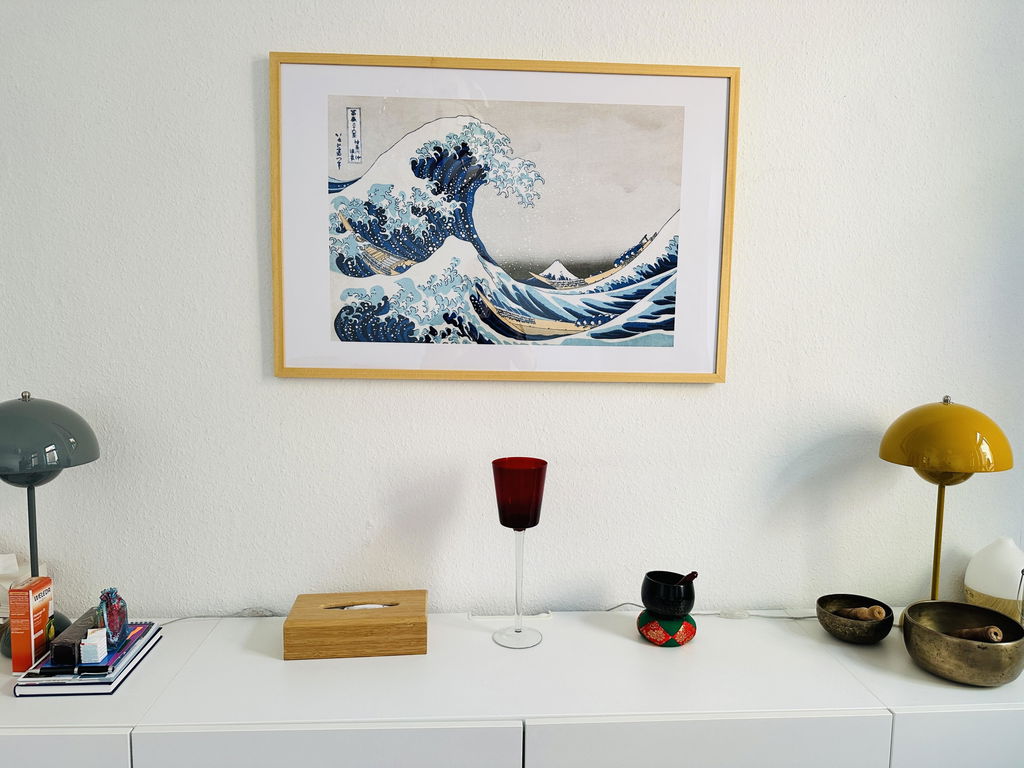
The gallery-style format pairs the figure with clean white margins, a quiet baseline of typography, and the soft natural paper tone preferred by Hirosada's Osaka block-cutters. The original line is kept untouched — the inked tongue, the umbrella's spokes, the geta sandal — but the framing reads like a museum print, where the modern field gives the 19th-century figure the room it asked for.
It sits well in lighter rooms where it can carry a touch of humour without crowding — pale plaster, oak, linen, vintage rugs. Hung in . . . Read More >>
Gosōtei Hirosada was an Osaka-school ukiyo-e artist active in the mid-19th century, best known for ōkubi-e — large-head theatrical portraits drawn from the Kamigata kabuki stage. The original print this piece is taken from, dating to 1852, lifts a Kasa-obake from kabuki and folk tradition: a one-legged umbrella spirit (a member of the broader yōkai family) that hops on a single sandaled foot, mouth wide and tongue out, a paper parasol for a body.
The gallery-style format pairs the figure with clean white margins, a quiet baseline of typography, and the soft natural paper tone preferred by Hirosada's Osaka block-cutters. The original line is kept untouched — the inked tongue, the umbrella's spokes, the geta sandal — but the framing reads like a museum print, where the modern field gives the 19th-century figure the room it asked for.
It sits well in lighter rooms where it can carry a touch of humour without crowding — pale plaster, oak, linen, vintage rugs. Hung in a hallway, child's room, library or playful living-room corner, the small figure invites a closer look rather than a wide one, and works as a quiet conversation piece next to bookshelves or a reading chair.
This is a gallery-style edition. On fine-art paper and framed prints, a wide printed border surrounds the image in the manner of a museum mat, holding the same proportion whether the sheet is small or large. The canvas edition is stretched over a solid wooden frame instead, and hangs without a border or additional framing. Each version is produced in Europe to order.
Frequently asked questions
What is a Kasa-obake?
A yōkai (folklore spirit) made from an old paper umbrella that has lived past its hundredth birthday — a hopping, single-legged figure with one eye and an extended tongue, more mischievous than fearsome.
When was the original made?
The source print dates to 1852, by the Osaka ukiyo-e artist Gosōtei Hirosada, active in the first half of the nineteenth century.
What does "gallery-style" mean?
On fine-art paper and framed prints the figure is presented with a wide printed border, quiet typography and a balanced field, in the manner of contemporary museum reproductions; the canvas edition is stretched over a solid wooden frame and hangs without a border.
Where does this print sit best?
Hallways, children's rooms, libraries and playful living-room corners where a small figure can hold attention without competing for the wall.
<< Read Less
Japan historical period: Edo 江戸 (1603-1868)
Check out other artwork of Gosōtei Hirosada