Esta xilografía es un retrato de guerrero, un musha-e, de Tokugawa Ieyasu, el primer shōgun del shogunato Tokugawa. La realizó Utagawa Yoshitora, un discípulo de la escuela Utagawa formado por Kuniyoshi y activo a mediados del siglo XIX. Ieyasu (1543–1616) ganó la decisiva batalla de Sekigahara en 1600 y fue nombrado shōgun en 1603, y fundó la dinastía que gobernó Japón durante más de dos siglos y medio. Aquí aparece como comandante, togado y sereno, una imagen de autoridad dibujada mucho después de su época.
La estampa es una nishiki-e, una xilografía a varios colores impresa a partir de numerosos bloques tallados a mano. Yoshitora recoge la línea rotunda y el fuerte estampado de la escuela Utagawa: contornos nítidos, textiles ricamente trabajados y campos planos de color saturado. La armadura y las túnicas se representan con detalle, mientras que el rostro adopta la expresión firme y deliberada de un gobernante.
En la pared, el retrato se sostiene con un peso ca . . . Leer más >>
Esta xilografía es un retrato de guerrero, un musha-e, de Tokugawa Ieyasu, el primer shōgun del shogunato Tokugawa. La realizó Utagawa Yoshitora, un discípulo de la escuela Utagawa formado por Kuniyoshi y activo a mediados del siglo XIX. Ieyasu (1543–1616) ganó la decisiva batalla de Sekigahara en 1600 y fue nombrado shōgun en 1603, y fundó la dinastía que gobernó Japón durante más de dos siglos y medio. Aquí aparece como comandante, togado y sereno, una imagen de autoridad dibujada mucho después de su época.
La estampa es una nishiki-e, una xilografía a varios colores impresa a partir de numerosos bloques tallados a mano. Yoshitora recoge la línea rotunda y el fuerte estampado de la escuela Utagawa: contornos nítidos, textiles ricamente trabajados y campos planos de color saturado. La armadura y las túnicas se representan con detalle, mientras que el rostro adopta la expresión firme y deliberada de un gobernante.
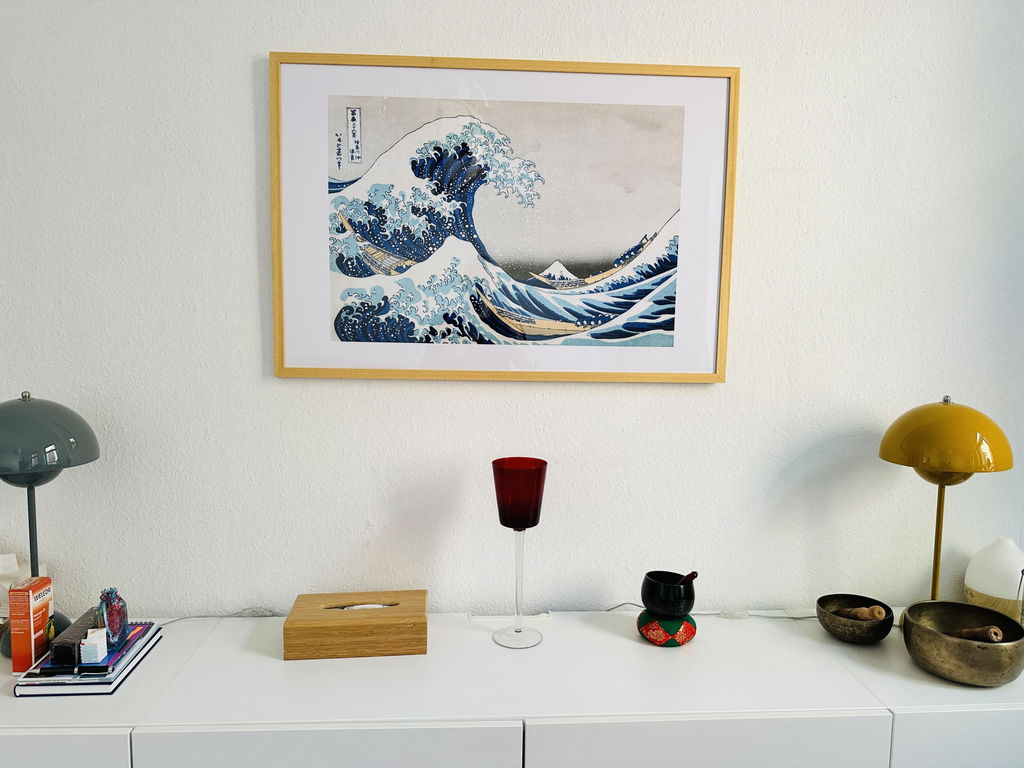
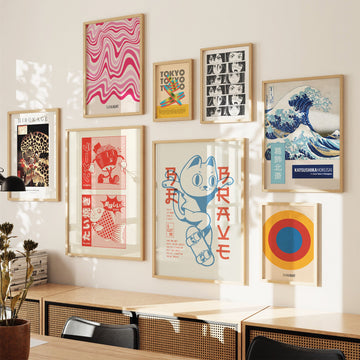
En la pared, el retrato se sostiene con un peso callado. Sus tonos profundos y su superficie estampada se leen como una sola imagen meditada, no recargada, y la paleta convive con la madera oscura, el yeso y los textiles apagados. Le sienta bien un estudio, una biblioteca, un pasillo o cualquier estancia capaz de sostener un retrato de presencia.
Disponible como lámina artística en papel de calidad de museo, como impresión enmarcada con marco de madera, o como lienzo satinado tensado sobre un bastidor de madera y listo para colgar.
Preguntas frecuentes
¿Quién aparece en esta estampa?
Tokugawa Ieyasu (1543–1616), el primer shōgun del shogunato Tokugawa, representado como un comandante togado y sereno.
¿Qué es un musha-e?
Una estampa de guerrero, un género del ukiyo-e que muestra generales y héroes; esta pertenece a la tradición rotunda de la escuela Utagawa.
¿Qué hizo Ieyasu?
Ganó la batalla de Sekigahara en 1600 y llegó a shōgun en 1603, y fundó la dinastía que gobernó Japón durante más de dos siglos y medio.
¿Dónde encaja este retrato en casa?
Sus tonos profundos y su superficie estampada convienen a un estudio, una biblioteca o un pasillo, y armonizan con la madera oscura, el yeso y los textiles apagados.
<< Leer menos
Periodo histórico de Japón: Edo 江戸 (1603-1868)
Lugar de origen:
Kanto region
Descubre otras obras de Utagawa Yoshitora
#Japanese Illustration
•
#Japanese Woodblock Print
•
#Samurai
•
#Ukiyo-E
•
#Utagawa Yoshitora
•
#Warrior
•
#Yoshitora Utagawa