Katsukawa Shunshō (1726-1793) fue el fundador de la escuela Katsukawa y uno de los diseñadores más influyentes del yakusha-e, la estampa de actores de kabuki. Activo en Edo desde la década de 1760, sustituyó las figuras de actor estilizadas e intercambiables de las escuelas anteriores por retratos individuales de aguda observación, que registraban los rasgos de intérpretes concretos tal como aparecían en escena. Esta hoja muestra al especialista en papeles femeninos Segawa Yūjirō I en el papel de Matsukaze, identificada en el cartucho como la hermana de Togashi no Saemon, un papel de kabuki tomado de la obra de teatro Noh Ataka y de su posterior tradición Kanjinchō.
La estampa es una xilografía en color (nishiki-e), producida tallando un bloque distinto para cada color y alineándolos a mano. Shunshō construye la figura mediante largas y serenas líneas de contorno y amplias zonas de patrón: el kimono se trata como un campo plano de ornamento textil sobre el fondo sin mar . . . Leer más >>
Katsukawa Shunshō (1726-1793) fue el fundador de la escuela Katsukawa y uno de los diseñadores más influyentes del yakusha-e, la estampa de actores de kabuki. Activo en Edo desde la década de 1760, sustituyó las figuras de actor estilizadas e intercambiables de las escuelas anteriores por retratos individuales de aguda observación, que registraban los rasgos de intérpretes concretos tal como aparecían en escena. Esta hoja muestra al especialista en papeles femeninos Segawa Yūjirō I en el papel de Matsukaze, identificada en el cartucho como la hermana de Togashi no Saemon, un papel de kabuki tomado de la obra de teatro Noh Ataka y de su posterior tradición Kanjinchō.
La estampa es una xilografía en color (nishiki-e), producida tallando un bloque distinto para cada color y alineándolos a mano. Shunshō construye la figura mediante largas y serenas líneas de contorno y amplias zonas de patrón: el kimono se trata como un campo plano de ornamento textil sobre el fondo sin marcar, con el nombre del actor situado en una cartela vertical. El carácter escénico de un papel onnagata —un actor varón que encarna un papel femenino— se transmite en el ángulo de la cabeza, el medio giro del cuerpo y la posición de las manos, más que en el detalle fisonómico.
Colgada a la altura de los ojos, la hoja recompensa la mirada atenta. Encaja bien en un estudio, un rincón de lectura o un pasillo, donde su sereno formato vertical y su paleta contenida pueden leerse sobre paredes claras. Junto a otra estampa de figura del periodo Edo o a un único rollo colgante de caligrafía, trae al cuarto un pequeño fragmento del teatro kabuki de finales del siglo XVIII sin dominarlo.
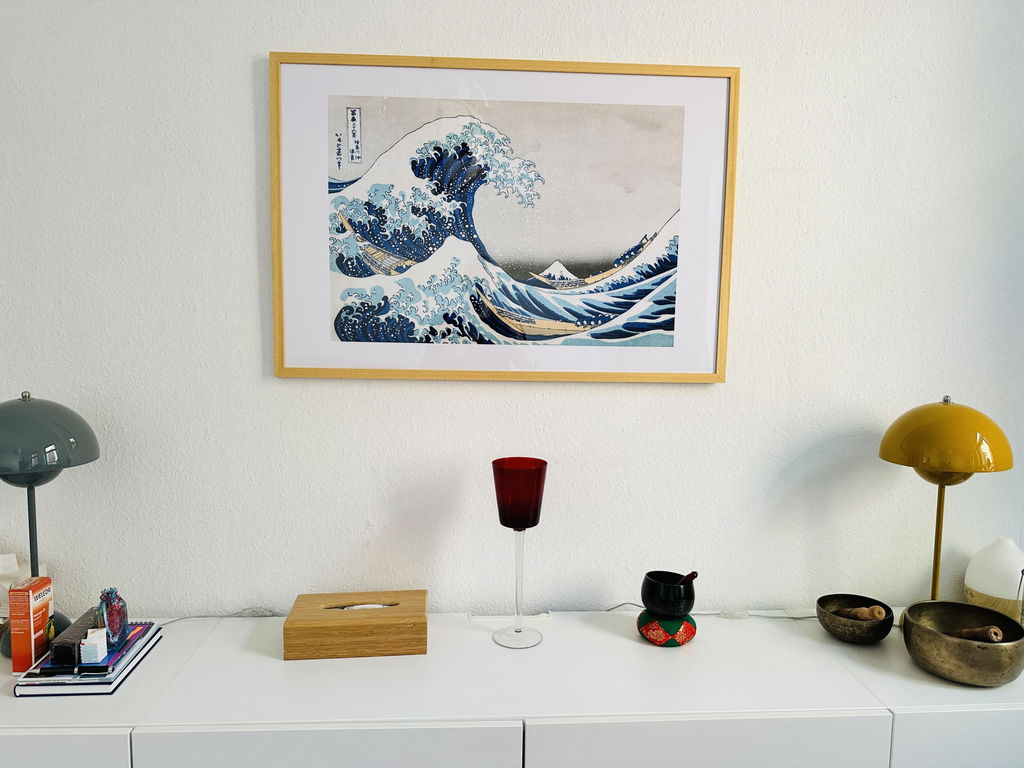
Disponible como cartel en papel artístico de archivo, como cuadro enmarcado con marco de madera, o como impresión sobre lienzo satinado de algodón, tensado y listo para colgar.
Preguntas frecuentes
¿Quién diseñó esta estampa y cuándo?
La diseñó Katsukawa Shunshō (1726-1793), fundador de la escuela Katsukawa de estampas de actores, en la segunda mitad del siglo XVIII en Edo.
¿A quién se representa?
Al actor onnagata Segawa Yūjirō I, en el papel de kabuki de Matsukaze, descrita en el título como la hermana de Togashi no Saemon: un personaje tomado de la obra Noh Ataka y de la tradición de kabuki que se convirtió en Kanjinchō.
¿Qué es un yakusha-e?
Un yakusha-e es una estampa xilográfica de actores, una rama principal del ukiyo-e. A Shunshō se le atribuye haber convertido el género, de un retrato-tipo estilizado, en un parecido reconocible de un intérprete concreto.
¿Dónde luce bien esta estampa?
En un estudio, un rincón de lectura, un pasillo tranquilo o cualquier lugar de luz contenida. Su estrecho formato vertical combina bien con un único rollo colgante o con otra pequeña hoja de figura del periodo Edo.
<< Leer menos
Periodo histórico de Japón: Edo 江戸 (1603-1868)
Descubre otras obras de Katsukawa Shunsho
#Bijin-Ga
•
#Edo Period
•
#Katsukawa Shunsho
•
#Kimono
•
#Mask
•
#Suzuki Harunobu
•
#Theatrical
•
#Traditional Japanese Art
•
#Ukiyo-E
•
#Woman
•
#Yakusha-E (Actor Print)